How Massage Therapy Helps Relieve Sciatica Pain
| Key TakeawaysMassage targets the root causes of sciatica.Improves circulation and supports natural healing.Reduces inflammation and swelling for lasting relief.Minimal side effects compared to the dependency risks of painkillers.High satisfaction rates with long‑term mobility improvement. |
Sciatica can be a relentless, life-altering condition. Characterized by sharp, burning pain, tingling, or numbness that radiates from your lower back down through the leg, it impacts everything, from your work and sleep to simple daily activities.
Research shows that sciatica is one of the most common forms of nerve pain, with 40% of people experiencing it at some point in their lives. Fortunately, there’s a proven solution: massage therapy. Unlike quick fixes, massage doesn’t just mask symptoms, it addresses both the pain and its root causes, offering long‑term relief from nerve compression.
Unlike quick fixes, it addresses both the symptoms and the causes of nerve compression. To know more, you can read further.
What Is Sciatica Pain And Its Causes
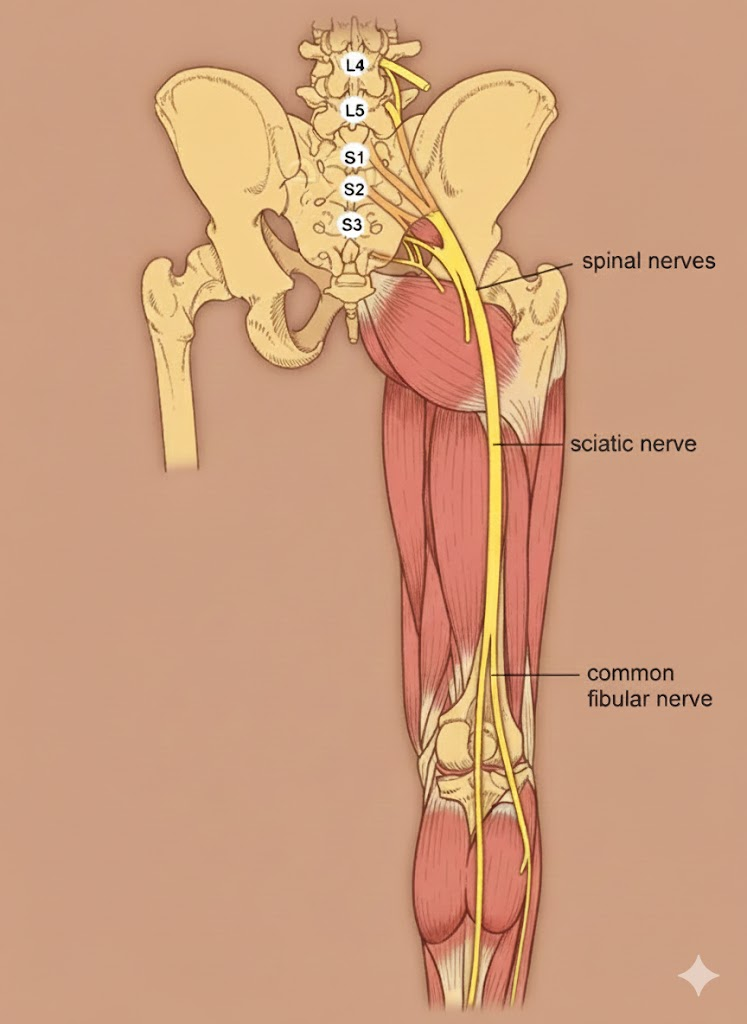
The sciatic nerve, the largest in the body, runs from the lower spine (nerve roots L4 to S3) through the buttocks and down each leg. When this nerve becomes irritated or compressed (whether by tight muscles, a herniated disc, or poor posture), the result is sciatica pain that can disrupt every aspect of daily life.
Common Causes
- Herniated Disc: A slipped disc pressing on the sciatic nerve.
- Tight Muscles: Especially the piriformis and gluteal muscles.
- Pregnancy: Added pressure on the lower spine and pelvis.
- Poor Posture/Sedentary Lifestyle: Sitting for long hours weakens spinal support.
| Why Does The Nerve Get Irritated?When surrounding muscles or spinal structures compress the sciatic nerve, pain signals travel down the leg, which cause burning, tingling, or numbness. |
Massage Benefits vs. Painkillers
| Benefit | Massage Therapy | Painkillers |
| Muscle Relaxation | High – targets root cause | Low – symptom relief only |
| Circulation Improvement | Boost in blood flow | None – primarily masks symptoms |
| Long-Term Pain Reduction | Sustained relief | Temporary relief |
| Long-Term Mobility | Improves range of motion and function | Temporary improvement only |
| Side Effects | Minimal (mild soreness 24–48 hours) | High dependency, GI issues, and addiction risk |
| Cost-Effectiveness | Highly effective per session | Requires ongoing medication |
How Massage Therapy Helps
Massage therapy directly addresses the root cause of sciatica:
- Muscle Relaxation and Nerve Decompression
- Tight muscles in the lower back, hips, and buttocks can press on the sciatic nerve.
- Massage helps release this tension, reducing nerve pressure and easing pain.
- Improved Blood Circulation and Healing
- Massage increases circulation, bringing oxygen and nutrients to sore tissues.
- It also removes waste like lactic acid, speeding up recovery and reducing stiffness.
- Endorphin Release and Pain Modulation
- Massage triggers endorphin release; your body’s natural painkillers.
- These chemicals lower pain, improve mood, and promote relaxation.
- Reduced Inflammation and Swelling
- Improved circulation and lymphatic drainage reduce swelling around the nerve.
- This creates better conditions for healing and long-term relief.
Types of Massage for Sciatica
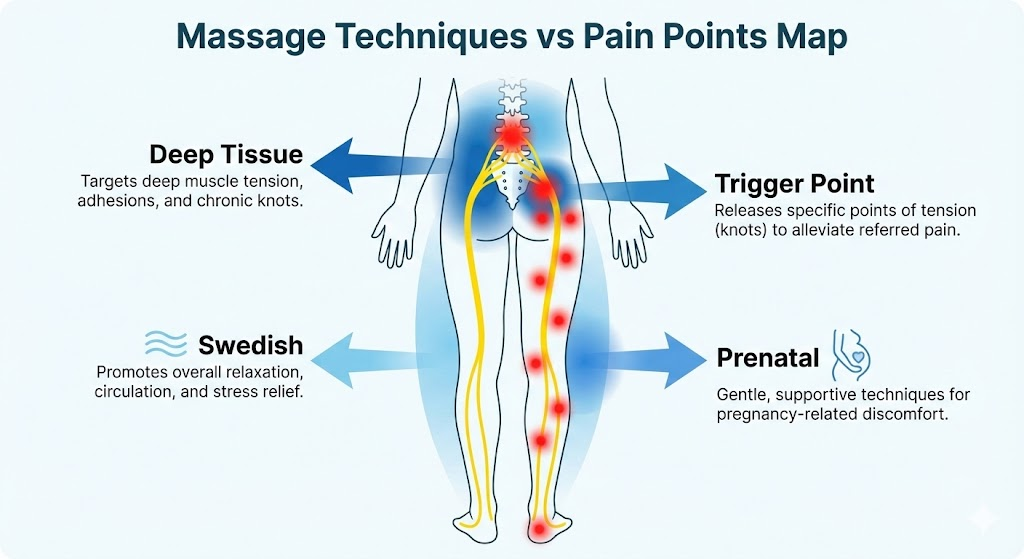
Did you know no two massages are created equal? If so, then here we offer techniques proven to help with sciatica.
- Deep Tissue Massage
This massage uses slow, firm pressure to reach deep muscle layers. It breaks up scar tissue and eases long-standing tension that presses on the sciatic nerve. Some mild soreness may follow, but most people feel lasting relief.
- Myofascial Release Therapy
Applies gentle, steady pressure to loosen stiff connective tissue around muscles. This reduces pressure on a trapped nerve and restores mobility, especially during sciatica flare‑ups.
- Trigger Point Therapy
Targets specific tight muscle fibres that irritate the sciatic nerve. Trigger points in the piriformis muscle respond well, helping relieve radiating pain down the leg.
- Swedish Massage
Uses long, flowing strokes to improve circulation and promote relaxation. It reduces muscle tension and stress, making it a good choice for those new to therapeutic massage.
- Prenatal Massage
Hot stones warm and deeply relax muscles, while cupping gently lifts tissue to release adhesions. Both methods enhance standard massage and are effective for stubborn sciatica tension.
Red Flags: Signs that you need immediate medical attention.
Seek Emergency Care Immediately (ER or call 911) if you experience these sciatica symptoms:
Red Flags
- Severe leg weakness or foot drop (cannot lift foot)
- Loss of bowel/bladder control (incontinence)
- Saddle anaesthesia (numbness in the genital/perineal area)
- Progressive neurological decline (worsening over 24-48 hours)
- Fever + back/leg pain (spinal infection)
- Recent trauma with severe, unrelenting pain
- Bilateral leg symptoms (both legs affected)
Physician Clearance Required Before Massage
- Blood clots (DVT history)
- Recent spinal surgery (<6-8 weeks)
- Severe osteoporosis
- Active cancer or chemotherapy
- Uncontrolled hypertension
- Acute fractures or infections
These indicate surgical emergencies requiring MRI and neurosurgical evaluation, NOT massage therapy.
Why Combining Massage & Chiropractic Care Works Best
Massage helps relax muscles, while chiropractic care corrects spinal misalignments. Together, they reduce nerve compression more effectively.
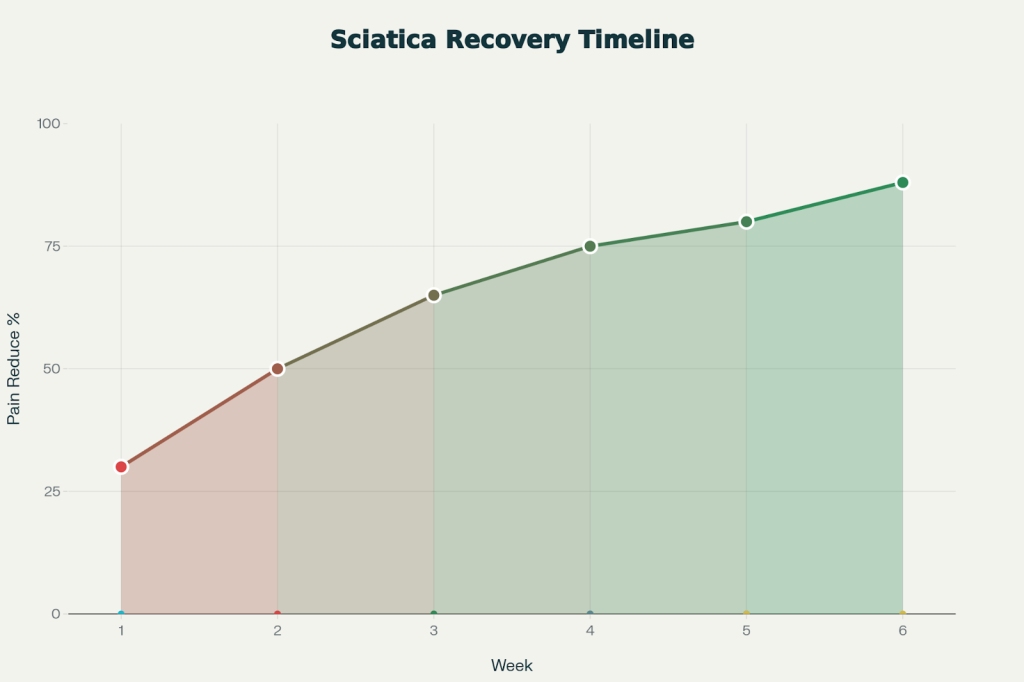
Treatment Timeline (Typical):
- Weeks 1-2: Initial relief from both therapies
- Weeks 2-4: Further pain reduction and improved functionality
- Weeks 4-8: Significant improvement for moderate cases
- Weeks 8+: Maintenance care and prevention
Expected Outcomes:
- 4-12 weeks for noticeable relief (varies by severity)
- 14-20 days for acute pain reduction
- 7-10 additional days to regain strength
- 2+ months to return to strenuous activities
Conclusion
Now you know that massage therapy is a safe and proven solution for sciatic pain, addressing both symptoms and root causes. Unlike painkillers, which provide temporary relief, massage improves circulation, reduces inflammation, and restores mobility. With minimal side effects and high patient satisfaction, it stands out as a cost‑effective, long‑term approach. Combining massage with chiropractic care further enhances recovery, helping patients regain strength, functionality, and quality of life.
Book your appointment today with trusted professionals and take the first step toward lasting comfort and mobility.
FAQs
- What to expect in the first session
Health history (10 min), pain assessment (5 min), targeted treatment (45 min). Wear comfortable clothing; mild soreness is normal for 24-48 hours.
- How quickly does massage help with sciatica?
Relief can begin within 1–2 sessions, with long‑term improvement over weeks.
- Is massage therapy safe for everyone?
Yes, but pregnant women or those with medical conditions should consult a professional.
- Which massage type works best for sciatica?
Deep tissue and trigger point therapy are most effective for nerve compression.
- Can massage replace painkillers?
Massage reduces reliance on painkillers but may be combined with medical advice.
- How long do results last?
With consistent therapy, benefits can last months, especially when paired with lifestyle changes.
Disclaimer: This article is for general information only and is not a substitute for professional medical advice. Massage therapy can support relief from sciatica, but results vary for each individual. Always consult a qualified healthcare provider before starting any new treatment. If you have existing medical conditions, seek guidance from your doctor to ensure massage is safe for you.