Osteopathy Treatment Vs. Massage Therapy: Which Is Right For You?
| Quick Takeaway: Osteopathy addresses long-term issues like sciatica and scoliosis, improving body function. Massage therapy offers quick relief for muscle tension, stress, and minor injuries. Consult a healthcare professional to choose the right therapy for your needs. Combining both therapies can provide the best results for recovery and overall well-being. |
Are you dealing with consistent back pain or stiffness in joints?
When searching for relief, you may have wondered whether to choose Osteopathy or Massage Therapy. Both are effective treatments for musculoskeletal pain, releasing tension and reducing soreness. However, these techniques vary based on approach and what your body needs.
Keep reading to gain a clear understanding of massage therapy and osteopathy, and make the right decision based on your needs.
What Is Osteopathy?
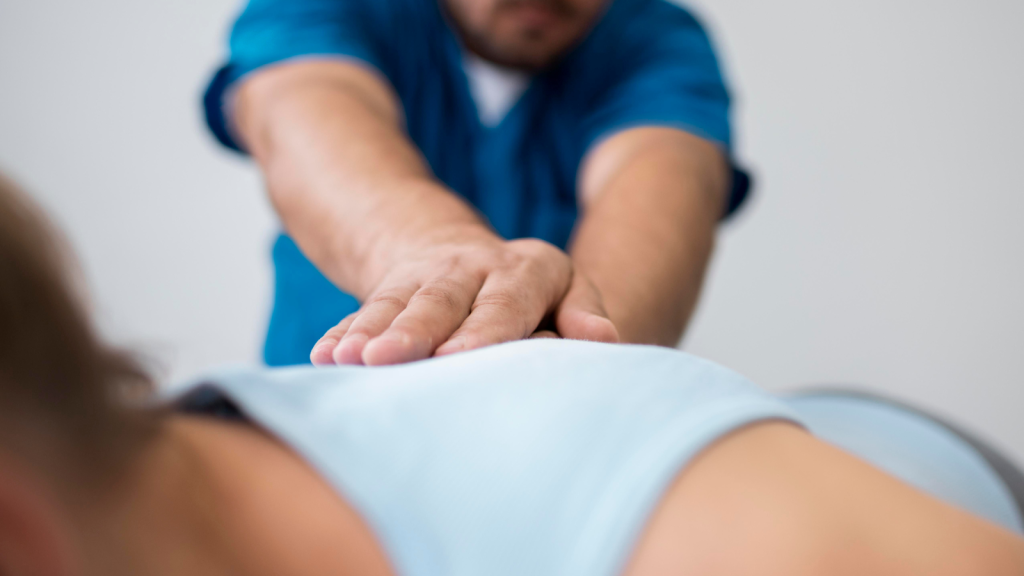
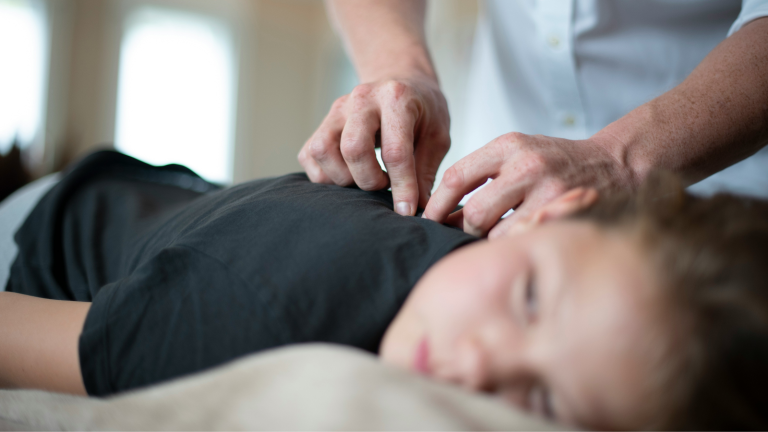
Osteopathy is natural (healing the body naturally), drug-free, and manual therapy (using hand techniques). This holistic approach (whole body care) analyzes how body structure (bones, muscles, and joints) shapes the functions (body movement).
How It Works:
During this therapy, an osteopath uses different techniques such as:
- Soft Tissue Manipulation:
This involves applying pressure to the muscles, tendons, and ligaments to reduce tension and pain, and improve blood flow.
- Joint Mobilization:
This involves reducing stiffness by gently moving joints in a specific way, ensuring normal movement, and reducing joint discomfort.
- Spinal Manipulation:
This involves carefully correcting the spine by applying thrust (controlled force) to the joint points to relieve pain, ensuring overall mobility and flexibility.
Condition Treated:
Common conditions that an Osteopath treats are:
- Back pain:
Issue: Slipped disc, muscle strain.
How Osteopaths help: Address spine alignment and improve mobility.
Results: Improved movement and reduced pain.
- Headache:
Issue: Tension headaches, migraine, neck and shoulder pain.
How Osteopaths help: Reduce muscle tension, improve blood flow, release pressure.
Results: Fewer headaches and calmer mood.
- Sciatica:
Issue: Pain and numbness in the back and lower leg.
How Osteopaths help: Reduce nerve pressure and improve spinal alignment.
Results: Ease pain and improved mobility.
| Did You Know?The sciatic nerve is the longest and widest nerve in the human body, running from the buttocks down towards each leg. |
- Sports injury:
Issue: Tennis elbow, pain in muscles and joints.
How Osteopaths help: Improve joint movement and reduce muscle tightness.
Results: Speed up recovery and reduce discomfort.
- Pregnancy discomfort:
Issue: Back pain and Pelvic Discomfort.
How Osteopaths help: Adjust the body posture.
Results: Reduce muscle and joint pain.
- Heart health:
Issue: High blood pressure, poor circulation, and stress.
How Osteopaths help: Address muscle tension and improve blood circulation.
Results: Better overall heart function.
- Breathing issue:
Issue: Asthma, sinusitis, or sinus infection.
How Osteopaths help: Improve the ribcage and diaphragm movement.
Results: Improve respiratory function.
- Digestive issue:
Issue: Bloating, constipation, or acid reflux.
How Osteopaths help: Reduces muscle and nerve tension in the abdominal area.
Results: Improve digestion.
What is Massage Therapy?
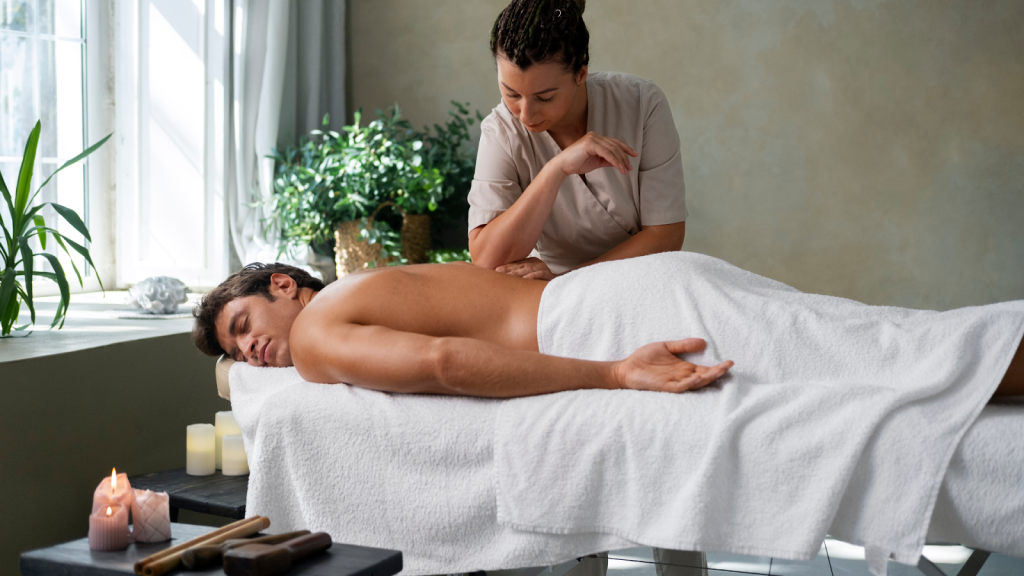
Massage therapy is one of the earliest techniques that a physician uses to relieve pain and treat various health conditions.
Types Of Massage Therapy:
Here is an outline showing different types of massage therapy:
| TYPES | WHAT IS IT? | RELIEF |
| Deep Tissue Massage | Restores muscles and connective tissues | Improve flexibility, Upper back, stiff neck, sore shoulder, and chronic pain |
| Swedish Massage | A gentle therapy using long strokes and kneading | Alleviate stress, improve circulation, and provide relaxation |
| Prenatal Massage | A safe massage technique for pregnant women | Ease back pain, reduce swelling, and discomfort |
| Hot Stone Massage | A smooth, heated stone is placed on the body | Relax muscles, promote relaxation, and improve blood flow |
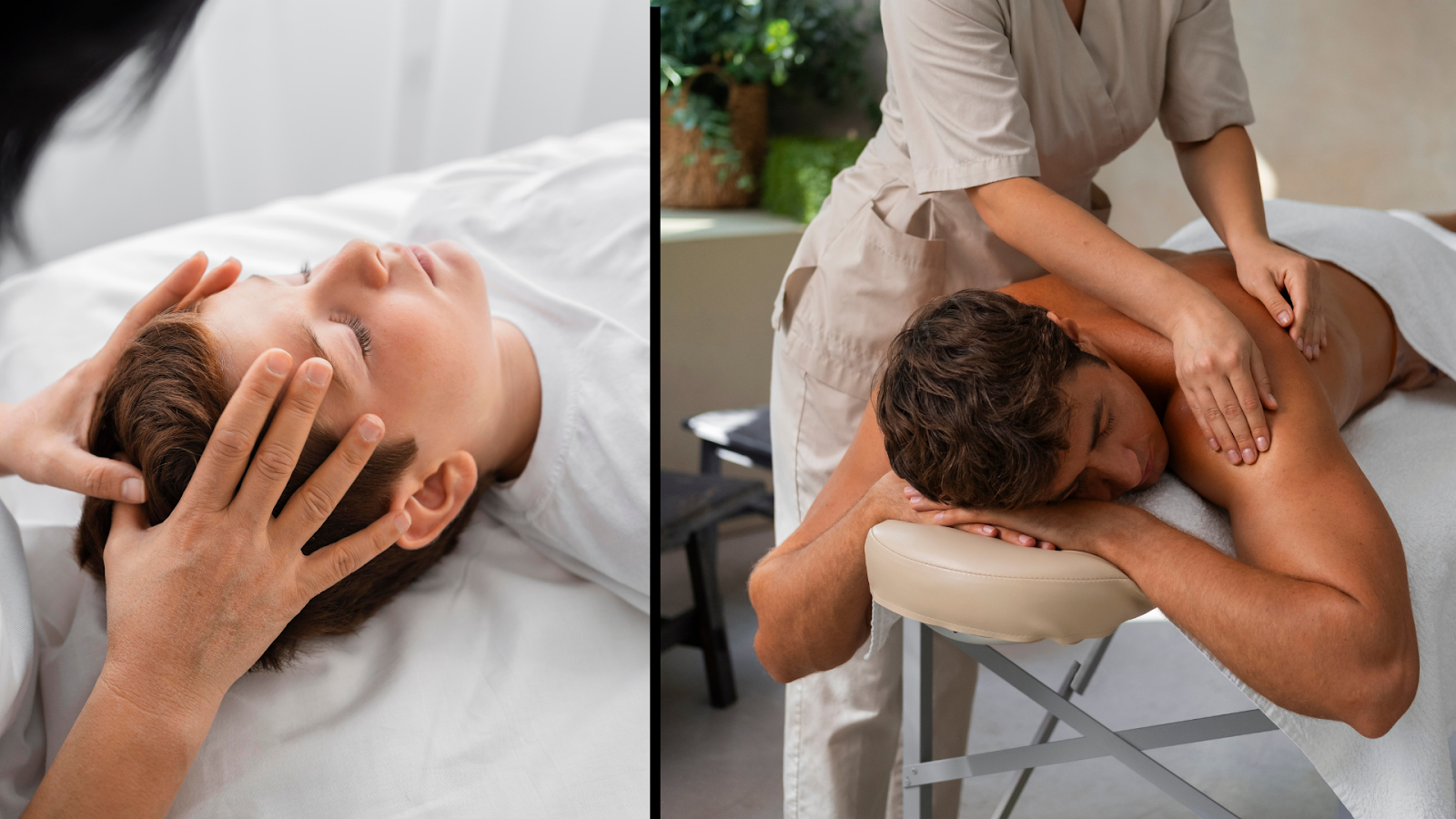
| Indian Head Massage | Focus on the head, neck, and shoulder | Manage headache, reduce neck and shoulder pain |
| Infant Massage | Gentle massage designed for babies | Good for digestion, improves sleep |
| Cupping Massage | Use suction cups for blood circulation | Ease muscle pain, tension, and improve poor circulation |
| Trigger Point Therapy | Target the tight muscle area | Elevate pain in a specific area, muscle stiffness |
| Myofascial Release | Relieving tension in the connective tissue area (fascia) | Improve flexibility, treat chronic pain |
| Did You Know?A fascia covers our body structure. It’s a stretchy layer of tissue that is like a web covering our body muscles, bones, and organs. When it gets damaged, it causes muscle and joint stiffness. |
Key Differences Between Osteopathy and Massage Therapy
Approach to Treatment
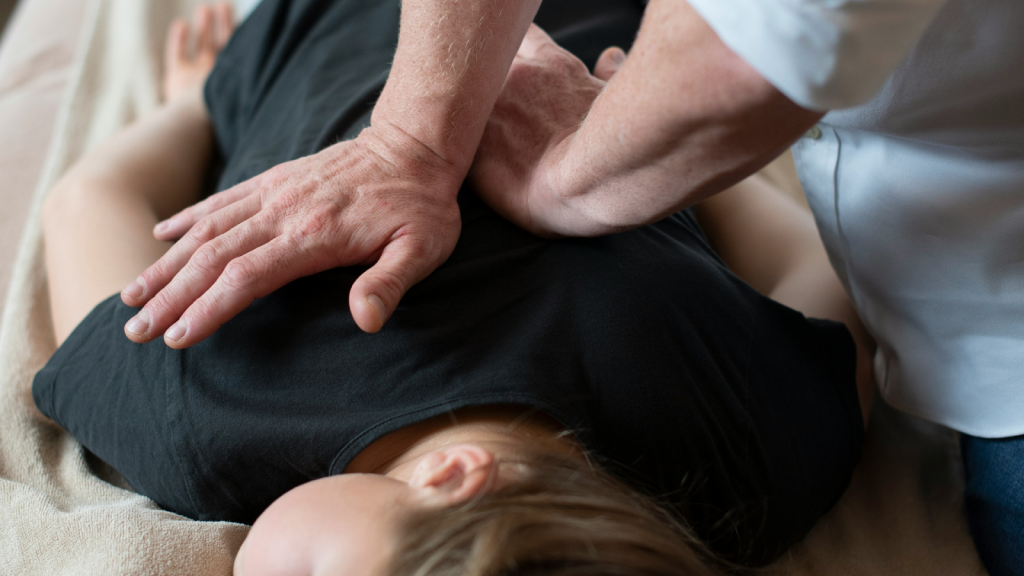
- Osteopathy: It focuses on physical problems and improves the overall function of the body using hands-on techniques. It focuses on posture, lifestyle, and muscle imbalance.
- Massage Therapy: It focuses on relaxing muscles, relieving tension, and increasing blood flow.
Treatment Methods & Goals of the Treatment
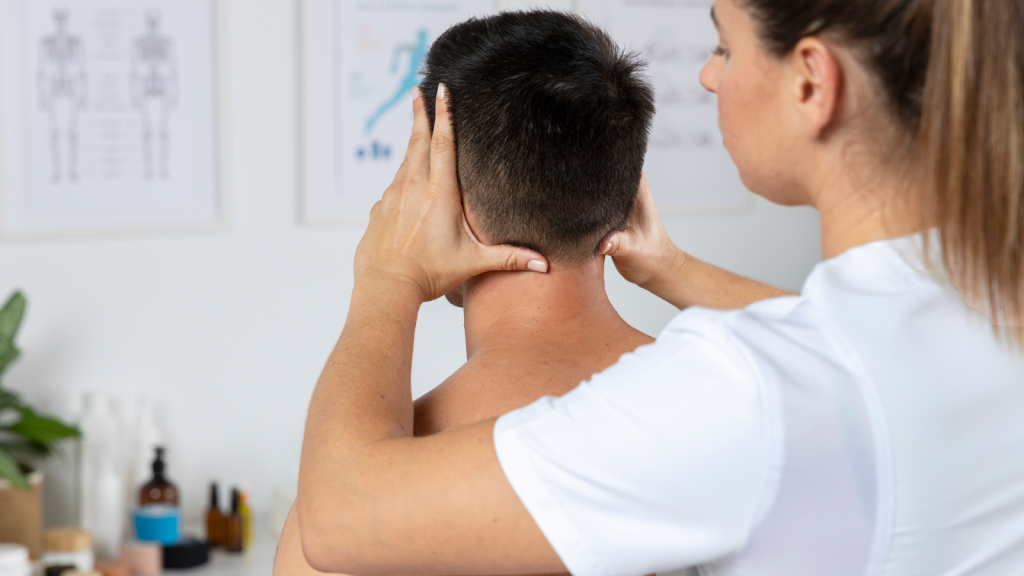
- Osteopathy: Includes spinal adjustment, stretching muscles, and mobilizing the joints to reduce pain.
- Massage Therapy: Includes kneading, pressing, and stroking muscles to reduce stiffness and improve blood flow.
Which One Should You Choose?
Osteopathy:
- It’s a great choice for people suffering from chronic pain and musculoskeletal conditions such as sciatica, scoliosis, joint pain, or back pain.
- It helps patients by focusing on the root cause, by focusing on whole body function rather than just the symptoms.
| Quick Note: “Scoliosis” is a condition where the spine curves sideways and forms an “S” or “C” shape. It can lead to back pain and affect the posture. |
Massage Therapy:
- It’s ideal for people who experience tight muscles due to minor injuries and want to ease muscle tension.
- Perfect for people who want instant relaxation and stress relief.
Tips for Choosing the Right Therapy for You
- Consult with a healthcare professional:
Before you take any therapy, it’s important to consult a doctor or healthcare professional. They can guide you with the right treatment by analysing your problem and symptoms.
If sciatica, headaches, or everyday stress have been weighing you down, and you’re hoping osteopathy or massage therapy can help, consult our expert physicians at Ultimate Health Clinic. Our team can offer care for individuals of all age groups, providing guidance, treatment, and prevention tips.
- Watch for symptoms
Paying attention to the small details and discomfort areas can help you get better treatment. For long-term issues like joint pain, posture problems, osteopathy is a wise option, whereas for muscle stiffness or stress, massage therapy is a great choice.
- Combining therapies
For people suffering from any injury, combining both therapies will be the best choice. For instant relief, massage therapy will work, and for long-term issues, osteopathy is perfect.
Conclusion
Both osteopathy and massage therapy are effective treatments that offer relief from pain, but in different ways. Osteopathy is ideal for long-term issues like sciatica or scoliosis, while massage therapy provides quick, immediate relief.
Before starting any treatment, it’s important to consult with a healthcare professional to ensure you choose the right therapy for your needs and take any necessary precautions.
FAQs
Q1- Why do I feel weird after an osteopath session?
A- It’s normal to feel a bit weird after the session; your body has just adjusted according to the changes. A pro tip- drink plenty of water, rest, and consult a physician if you feel discomfort.
Q2- What not to do after osteopathy?
A- Avoid heavy lifting, take small breaks while working, and avoid alcohol and smoking.
Q3- What is the best therapy for muscles?
A- Myofascial Release is the best therapy for treating pain and tightness in muscles.
Q4- What are three symptoms of a muscle strain?
A- Pain, soreness, and weakness. Consult a physician if you experience these symptoms.