Osteopath vs. Chiropractor: What’s the Difference?
Table of Contents:
- What Are Osteopaths and Chiropractors?
- Education and Credentials
- Treatment Philosophy
- What Conditions Do They Treat?
- Conclusion
- Frequently Asked Questions
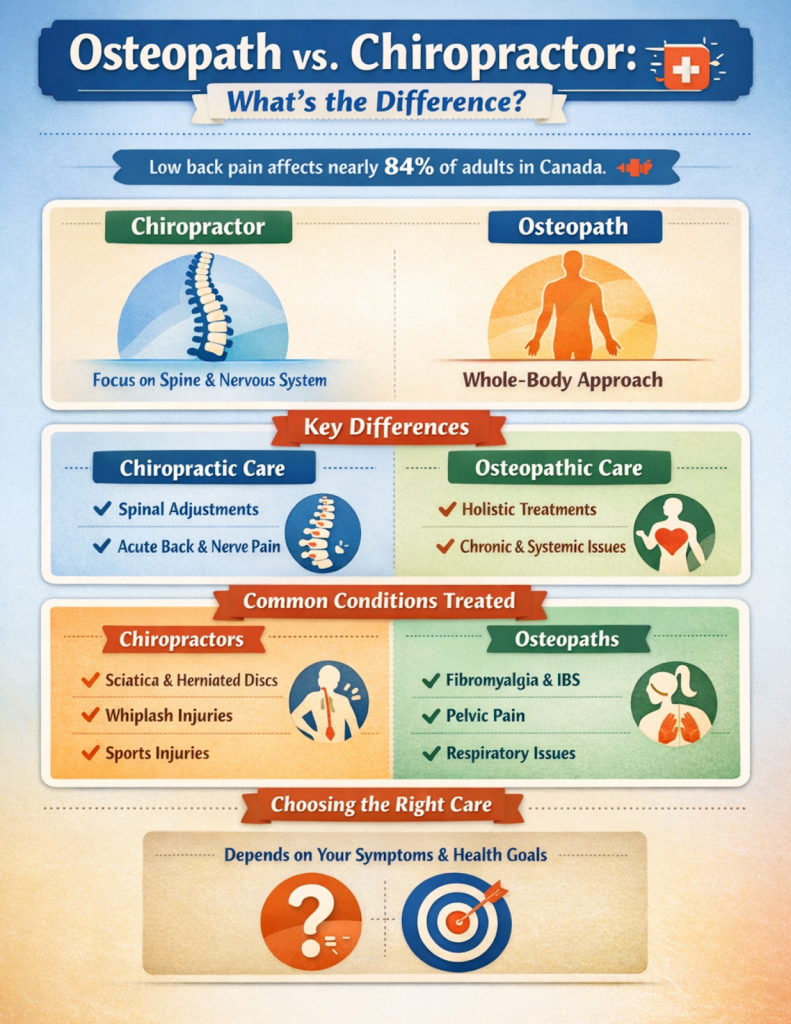
| Summary -Low back pain affects nearly 84% of adults in Canada. -Chiropractors and osteopaths both treat back pain but use different approaches. -Chiropractors focus on the spine and nervous system using targeted adjustments. -Osteopaths use a whole-body approach, treating muscles, fascia, and circulation. -Chiropractic care suits acute spinal issues, while osteopathy helps with chronic or systemic pain. |
Low back pain is one of the most prevalent musculoskeletal conditions in Canada, with nearly 84% of adults experiencing back pain at some point in their lifetime. When you experience a sharp pain in your lower back or a stiff neck, your first instinct is to find relief. As you search for a local specialist, you face a common dilemma.
Should you book an appointment with a chiropractor or osteopath for back pain?
Both professionals often treat the same conditions. However, there are a couple of things you need to understand about an osteopath vs a chiropractor. Their philosophies, techniques, and medical training are worlds apart.
Let’s see the difference between an osteopath and a chiropractor.
What Are Osteopaths and Chiropractors?
Chiropractors
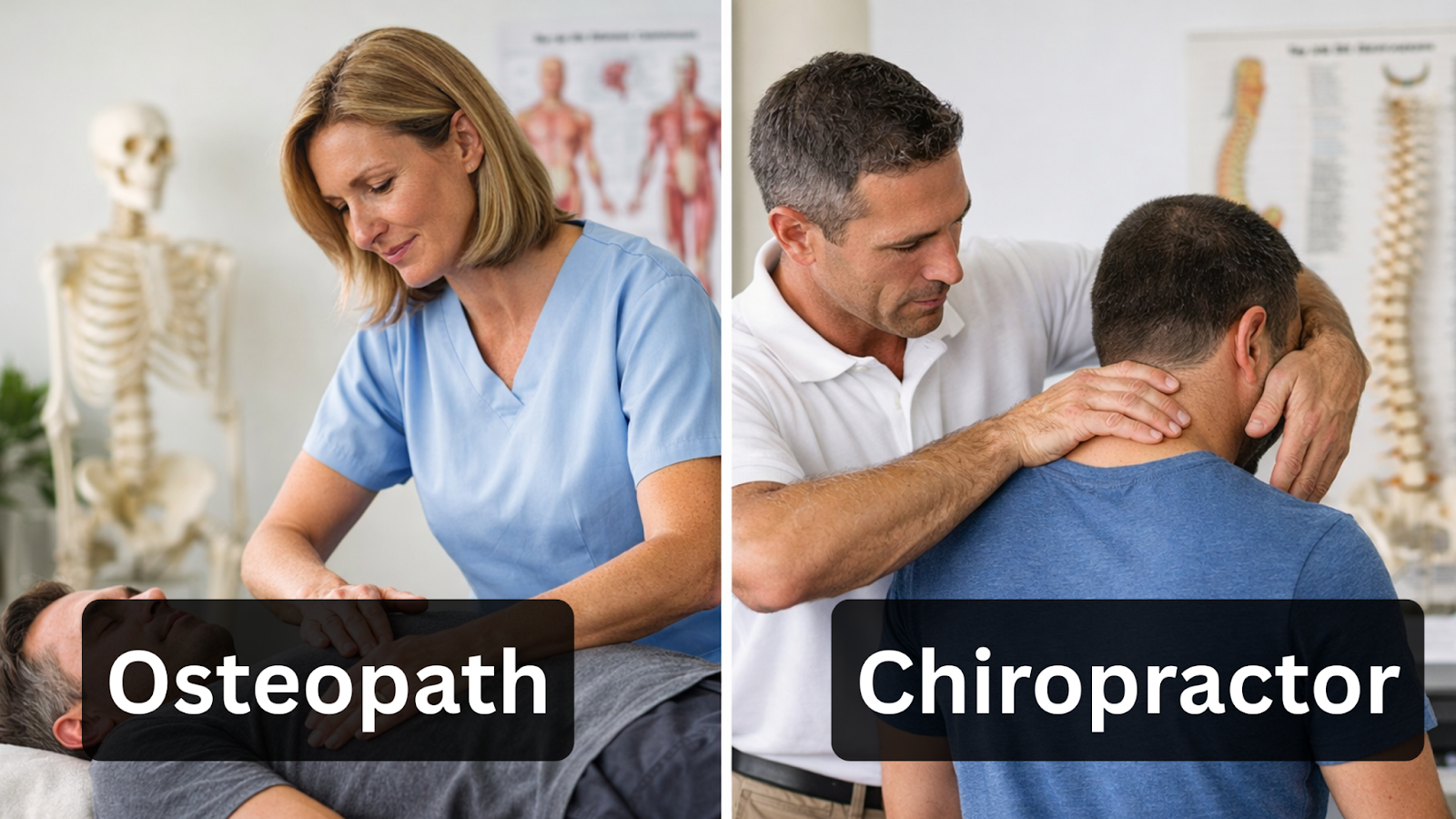
A chiropractor primarily focuses on the musculoskeletal system, with a heavy emphasis on the spine. The core belief in chiropractic is that the nervous system functions optimally with proper alignment of the body’s structures, particularly the spinal column. As a result, the body heals itself without surgery or medication. A chiropractor relies on targeted ‘adjustments’ to improve joint range of motion and nerve function.
Osteopaths
An osteopath focuses on the relationship between the body’s structure and its ability to function. They focus not just on the bones and muscles, but also on the joints, connective tissue (fascia), and even the internal organs.
The goal is to ensure that the body’s infrastructure (blood supply, lymphatic drainage, and nerve pathways) functions without any obstruction. The core belief is that the body naturally maintains health when its structure is balanced, and tissues are mobile. An osteopath relies on rhythmic stretching and gentle manipulation to restore balance across the entire system.
Education and Credentials
Chiropractic
Chiropractors are regulated primary healthcare professionals in every Canadian province. One must complete at least 3 years of an undergraduate university degree, followed by a 4-year, full-time Doctor of Chiropractic (DC) program.
Their education includes over 4,200 hours of specialized training in anatomy, biomechanics, and radiology (X-rays). After graduation, they must obtain a valid provincial license by passing the Canadian Chiropractic Examining Board (CCEB) exams.
Osteopathic
An osteopath holds a degree in a health-related field before completing a 4- to 5-year diploma in Osteopathic Manual Practice (DOMP). The osteopathic training focuses heavily on interconnections between visceral (organ) manipulation, craniosacral therapy, and other body systems, in addition to traditional musculoskeletal training.
Treatment Philosophy
Chiropractic
The core philosophy of chiropractic care is centred on the relationship between the spine and the nervous system. Chiropractors believe that misalignments in the spine can interfere with the signals travelling through your nerves.
Your nervous system controls every cell and organ in your body. A ‘glitch’ in the spine can lead to pain or poor health elsewhere. The practice aims to remove these interferences by precisely adjusting the vertebrae to “reset” the nervous system. This allows the body’s “Innate Intelligence” to heal itself.
Osteopathy
Osteopathic philosophy is built on the idea that the body is a single, integrated unit. In a session, the therapist looks at the “plumbing” and “infrastructure” of the entire body.
The body must have a rich supply of blood and healthy lymphatic drainage to be healthy. Tight muscles and stiff joints block the flow of life-sustaining fluids.
This practice focuses on the interconnectivity of musculoskeletal, circulatory, digestive and all other systems. If you restore the bones and fascia, the organs and nerves will work well.
| Feature | Chiropractor | Osteopath |
| Primary Focus | The spine and nervous system | The whole body and blood flow |
| Goal | Clear nerve interference | Restore balance and fluid flow |
What Conditions Do They Treat?
Chiropractors
Chiropractors view the spine as the central highway of the nervous system. They help treat acute mechanical issues related to joints and nerves.
Sciatica and Nerve Impingement
Treatment for shooting pain that travels down the leg
Herniated Discs
Managing spinal disc issues without surgery
Whiplash and Car Accident Injuries
Restoring neck mobility after trauma
Sports Performance
Used by athletes for “fine-tuning” joint mechanics and preventing injury
Scoliosis Management
Improving comfort and posture for those with spinal curvature
Osteopaths
They focus on fluid flow and the interconnectedness of organs and muscles.
Chronic Systemic Pain
Issues like fibromyalgia or long-term postural strain
Digestive Issues
Reducing tension around the organs using visceral manipulation to help with IBS, constipation, or bloating
Pelvic and Hip Issues
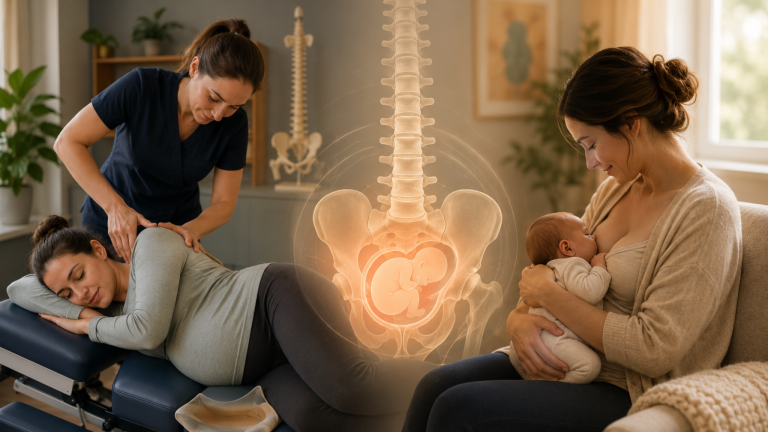
For pelvic girdle pain during and after pregnancy
Respiratory Support
Helping with rib cage and diaphragm mobility for conditions like asthma
Conclusion
It is important to understand the difference between an osteopath and a chiropractor to get the treatment that best aligns with your goals. While both are highly skilled, your choice often comes down to the style of care you prefer.
Ultimate Health Clinic has an expert team of osteopaths and chiropractors. Contact us for a consultation, or book an appointment today!
Frequently Asked Questions
Do I need a doctor’s referral to see a chiropractor or an osteopath in Canada?
Both chiropractors and osteopaths are considered primary contact health professionals. So, you can book an appointment directly without needing a doctor’s referral.
Is osteopathy or chiropractic care covered by provincial health plans like OHIP?
Provincial health plans like OHIP generally do not fully cover osteopathy and chiropractic care, as these services are typically considered extended health services and must be paid for out of pocket.
Can I see both a chiropractor and an osteopath at the same time?
Yes, you can, as a combination of both can provide comprehensive care for structural alignment and soft-tissue issues. However, make sure you inform both practitioners.
Is osteopathy safe for children and seniors?
Yes, it is a non-invasive, drug-free, safe, gentle, and effective manual therapy for people of all ages, including children and seniors.
Is chiropractic safe for children and seniors?
Gentle, low-force chiropractic techniques are generally safe and effective for children and seniors.