Lower Back Pain Treatment in Newmarket: What Are Your Options?
| Quick Summary: Lower back pain is a common condition with causes ranging from muscle strain and posture issues to nerve, disc, or joint problems. Since every case is different, finding the right treatment approach is important. Options like physiotherapy, chiropractic care, manual osteopathy, massage therapy, and acupuncture can help reduce pain, improve mobility, and support recovery. A proper assessment helps identify the best treatment for your specific needs. |
You bend down to tie your shoes, pick something up, or simply get out of bed, and suddenly, your lower back starts hurting. It’s a common experience, but knowing what to do next isn’t always as straightforward. Before you know it, your mind is filled with questions like;
- Should I rest for a few days or keep moving?
- Could massage therapy actually make a difference?
- Should I seek chiropractic care, or is physiotherapy a better option?
But if you are looking for lower back pain treatment in Newmarket, there isn’t one approach that works for everyone. The right approach depends on what’s causing your pain, how long you have had it, and how it affects your everyday activities. So, read this guide to learn about the lower back pain treatment options available in Newmarket and how to figure out which path makes sense for you.
How Common Is Low Back Pain?
Did you know, low back pain isn’t a rare or unusual complaint; it’s closer to a universal human experience. According to the World Health Organization (WHO), an estimated 619 million people were living with low back pain in 2020, and that number is projected to rise to 843 million by 2050. The burden is just as significant in Canada, where approximately one in every five Canadians experiences low back pain.
Given how common the condition is, it’s no surprise that lower back pain is also one of the leading reasons people seek healthcare across Ontario, including in Newmarket, East Gwillimbury, and the surrounding communities. But the reassuring news is that low back pain is not a sign of something dangerous and tends to improve, which is exactly why getting the right kind of care early matters more than most people realize.
What’s Behind Your Lower Back Pain? Start by Identifying the Type
One of the most consistent findings across Canadian clinical guidelines is that low back pain rarely has a single clean diagnosis or a single correct treatment. The Canadian Chiropractic Guidelines Initiative describes low back pain as a condition in which symptoms can be back-dominant, referred, or radicular (traveling into the leg). Also, its underlying contributors are often a mix of physical, psychological, and lifestyle factors rather than a single isolated injury.
That’s why, before choosing a lower back pain treatment in Newmarket, it’s important to have a rough sense of what kind of lower back pain you are dealing with.
- Acute Muscle Strain: Sudden pain caused by lifting, twisting, overexertion, or an awkward movement.
- Postural Pain: Gradual lower back discomfort linked to poor posture, prolonged sitting, or muscle imbalances.
- Nerve-Related Pain (Sciatica): Pain, tingling, or numbness that travels from the lower back into the buttock or leg.
- Disc-Related Pain: Pain that may occur when a bulging or herniated disc irritates nearby nerves.
- Joint-Related Pain: Localized back pain or stiffness caused by irritation or restricted movement in the spinal joints.
| QUICK SUGGESTION: If you are not sure which category applies to you, a physiotherapy assessment or chiropractic consultation is a good first step. |
Your Treatment Options for Low Back Pain in Newmarket
1. Chiropractic
Chiropractic care is a hands-on approach used to manage lower back pain problems involving the spine, joints, muscles, and movement. Lower back pain commonly involves spinal manipulation or mobilization, along with advice, exercises, and self-management. It is particularly effective for lower back pain with a spinal joint component, including facet joint issues and sacroiliac joint dysfunction.
How does it work?
- Assessment: A chiropractor reviews your symptoms, movement, posture, and overall function.
- Hands-on treatment: Depending on your condition, they may use spinal manipulation, mobilization, or other manual techniques.
You may also be given simple exercises to do to improve strength, flexibility, and mobility. When this approach is combined with active care such as exercise, it may help manage non-specific lower back pain, stiffness, reduced mobility, and some back pain that travels into the leg.
| READ MORE: If you would like to know exactly what is going to happen at your first visit, read our guide on what to expect at your first chiropractic consultation. |
2. Physiotherapy
Physiotherapy is one of the most evidence-supported approaches for lower back pain, particularly when it involves movement dysfunction, muscle weakness, or post-injury rehabilitation. With physiotherapy care, most patients start noticing improvement within 4 to 6 sessions.
How does it work?
A physiotherapist will usually assess how you move, identify which muscle groups are weak, tight, or overcompensating, and build a progressive exercise program alongside hands-on treatment. This tends to be especially useful for people whose pain is linked to poor movement patterns, sedentary work, or previous injuries that were never fully rehabilitated.
Common physiotherapy approaches include:
- Musculoskeletal Physiotherapy
- Therapeutic Exercises
- Manual Therapy
- Chronic Pain Management
| READ MORE: Want to learn in more depth how it works? You can read our guide A Physiotherapist’s Guide to Lower Back Pain Treatment to get an idea of everything. |
3. Manual Osteopathy
Osteopathy is a gentle, hands-on approach that looks at how different parts of your body work together rather than focusing only on the painful area. The goal is to identify movement restrictions, muscle tension, or imbalances that may be contributing to your lower back pain.
How does it work?
An osteopath assesses your overall movement, including your hips, pelvis, spine, and surrounding muscles, to understand what may be contributing to your lower back pain. Based on the assessment, a manual osteopath may use different hands-on techniques, such as:
- Direct techniques: These involve hands-on approaches like massage, joint manipulation, joint articulation, and stretching to improve mobility and reduce tension.
- Indirect techniques: These focus on gentle methods that encourage the body’s natural healing process and help patients improve movement and self-management.
This approach can be particularly helpful for people with chronic or recurring back pain who have already tried more targeted treatments without lasting results. Manual osteopathy treatment is effective because it addresses compensatory patterns that a narrower assessment might miss.
| Comparing Osteopathy and Chiropractic Care for Lower Back Pain Relief If you are weighing osteopathy against chiropractic care, our comparison post, “osteopath vs. chiropractor: what’s the difference,” walks through how the two approaches differ and which you should consider when. |
4. Massage Therapy
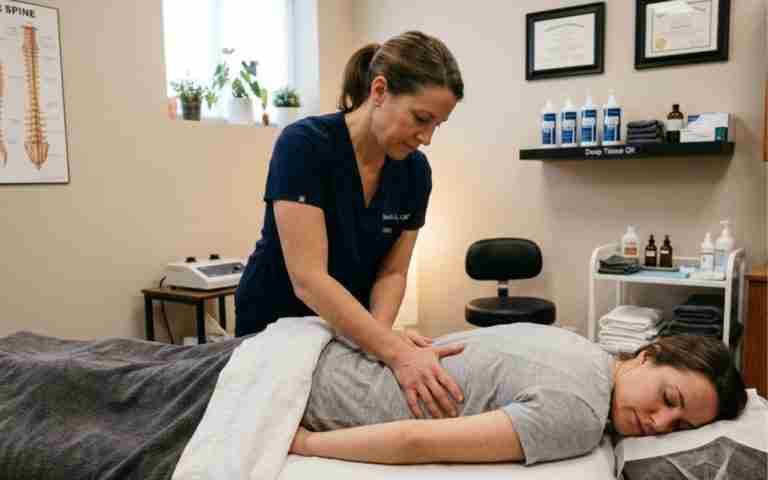
Massage therapy is a hands-on treatment that focuses on reducing muscle tension, improving circulation, and promoting relaxation in areas affected by lower back pain. While it may not address the underlying cause of every back problem, it can be helpful as part of a broader treatment plan, especially when muscle tightness and stress contribute to discomfort. For long-term improvement in lower back pain, massage therapy is often most effective when combined with active treatments such as physiotherapy, exercise, or movement-based care.
Here are the common types of massage therapy that may help with lower back pain:
- Deep Tissue Massage
- Trigger Point Therapy
- Myofascial Release Therapy
Techniques such as hot stone massage or cupping massage are sometimes used specifically to address deeper muscular tension in the lumbar and gluteal regions. To better understand which massage technique may be suitable for different types of back pain, explore our guide on 7 types of massage therapy for back pain.
5. Acupuncture
Acupuncture is a traditional treatment approach that involves the insertion of fine needles at specific points to help manage pain and encourage the body’s natural healing responses. This approach is particularly for patients looking for a drug-free option to manage discomfort while they work through a rehabilitation program.
How does it work?
During an acupuncture session, a trained practitioner places needles at targeted points based on your symptoms and assessment. The treatment is thought to stimulate the nervous system, promote the release of natural pain-relieving chemicals, and help reduce muscle tightness.
So, you are searching “Can Acupuncture help lower back pain? The short answer is “YES”! This approach is commonly used alongside other manual therapies for both acute flare-ups and longer-standing low back pain.
Ready to Address Your Back Pain?
Living with low back pain doesn’t have to be something you just manage around. Whether your pain started last week or has been coming and going for years, Ultimate Health Clinic in Holland Landing is located at 45 Grist Mill Rd Unit 3, Holland Landing, ON L9N 1M7, which is about 10 to 15 minutes from Newmarket.
With a focus on quality treatment, we have earned multiple awards and recognitions for our services. You can see our full history of local awards on our Awards & Accolades page. So, what are you waiting for? Book your consultation online at ultimatehealthclinic.janeapp.com or call 905-251-016.
Frequently Asked Questions
What is the best treatment for lower back pain in Newmarket?
There is no single best treatment for lower back pain for everyone. The right option depends on the cause of your pain, whether it is related to muscles, joints, nerves, posture, or previous injuries. But local clinics like Ultimate Health Clinic typically combine targeted physiotherapy, manual therapy, spinal adjustments, and active exercise rehabilitation for lasting relief.
Should I see a chiropractor or physiotherapist for lower back pain?
Both chiropractors and physiotherapists can help with lower back pain, but their approaches are different. Choose a chiropractor for sudden, sharp lower back pain, joint stiffness, or fast, hands-on spinal adjustments. On the other side, choose a physiotherapist for long-term recovery, muscle weakness, or a customized exercise program to prevent future injuries. Both are effective, and many people benefit from seeing both.
Can physiotherapy permanently fix lower back pain?
Physiotherapy cannot guarantee a permanent “cure” for lower back pain, because the spine is subject to natural aging, wear, and stress. However, it can provide long-term relief and prevent future flare-ups by correcting movement habits, building core strength, and restoring joint mobility.
Is massage therapy good for lower back pain?
Yes, massage therapy can help relieve muscle tension, stiffness, and discomfort associated with lower back pain. However, it is usually most effective when combined with active treatments like exercise, physiotherapy, or movement-based care for long-term improvement.
How do I know if my lower back pain is serious?
Lower back pain is serious if it comes with “red flag” symptoms like loss of bladder or bowel control, numbness in your groin, sudden leg weakness, a high fever, or if it starts after a severe car crash or hard fall. Most normal muscle strains get better within a few weeks, but you should seek professional advice if you experience symptoms mentioned above.