7 Types of Massage Therapy for Back Pain
Table of Contents:
- Causes of Back Pain
- Deep Tissue Massage
- Trigger Point Therapy
- Swedish Massage
- Myofascial Release
- Shiatsu Massage
- Hot Stone Massage
- Thai Massage
- Conclusion
- Frequently Asked Questions
| Summary: -Deep tissue massage breaks up deep-seated muscle “knots” and realigns connective tissue. -Trigger point therapy releases hyper-irritable spots to stop constant muscle contractions. -Swedish massage uses gentle strokes to boost circulation and promote total-body relaxation. -Myofascial release applies steady pressure to elongate tight or restrictive connective tissues. -Shiatsu massage uses firm finger pressure on energy pathways to balance the nervous system. -Hot stone massage employs heated stones to soften stiff muscles and reduce spasms. -Thai massage combines assisted yoga stretches and joint movement to decompress the spine. |
Nearly 8 out of 10 Canadians experience back pain at some point in their lives. In many cases, back pain becomes a recurring or chronic issue. It is not only a personal health challenge but also a significant public health concern.
While pain medications can provide short-term relief, they do not address the underlying muscular dysfunction.
Massage therapy is a clinically supported, non-invasive treatment for managing back pain. Different types of massage therapy can reduce pain intensity, improve range of motion, and support functional recovery in people with both acute and chronic back pain.
Causes of Back Pain
Back pain is often caused by a combination of lifestyle factors, physical strain, and underlying medical conditions. Common causes include:
- Muscle strain and ligament sprain from improper lifting or sudden movements, such as twisting or falling, can overstretch muscles or tear ligaments, often causing acute back pain.
- Staying in one position for too long can tighten hip flexors and weaken back muscles. Slouching over a keyboard or looking down at a smartphone puts excessive pressure on the spine.
- Herniated or bulging discs, osteoarthritis, and spinal stenosis can also cause back pain.
- High levels of stress and anxiety cause the body to maintain a state of muscular tension, particularly in the shoulders and lower back.
Best Massages for Back Pain
- Deep Tissue Massage
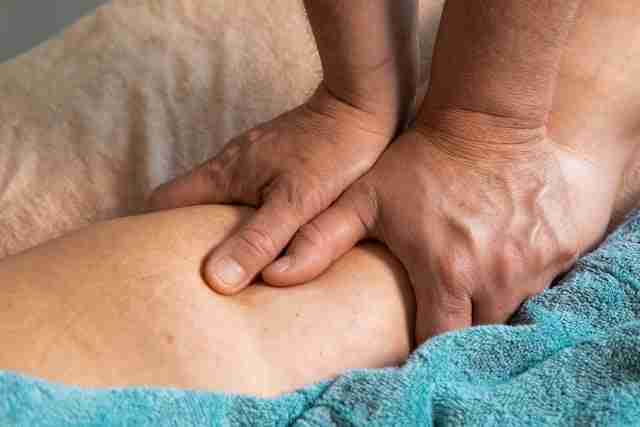
Deep tissue massage for a bad back is a popular choice, as it focuses on the realignment of deeper layers of muscles and connective tissue. It is a slow technique that uses deliberate strokes and intense finger pressure to reach the “subsurface” musculature.
It is one of the best massages for back pain as it breaks up adhesions, also known as knots. These bands of painful, rigid tissue can disrupt circulation and limit movement.
The following are the benefits of deep tissue massage:
- Chronic pain management
- Increased flexibility
- Injury rehabilitation
- Posture correction
It works on deep-seated tension, which can cause some discomfort during the session.
| Deep tissue massage may feel slightly sore for 24 to 48 hours after a session. |
- Trigger Point Therapy
This massage therapy focuses specifically on trigger points, which are small, hyper-irritable spots within a taut band of muscle. People often describe a taut band as tiny, hard marbles under the skin. Trigger point therapy aims to identify the source of the pain rather than just treating where it is felt.
The therapist identifies these specific points and holds pressure on them for several seconds. As the pressure is released, fresh, oxygenated blood rushes into the tissue. This cycle helps the muscle “reset” from a state of constant contraction to a relaxed state.
The following are the benefits of trigger point therapy:
- Targeted relief
- Improved range of motion
- Breaking the pain-spasm cycle
- Swedish Massage
Swedish massage is the most common form of massage therapy, known for its gentle to moderate pressure and focus on total-body relaxation. The following table shows the five pillars of Swedish massage therapy.
| Massage Technique | Type of Movement | Goal |
| Effleurage | Long, gliding strokes | Warms up musclesImproves surface circulation and prepares tissues |
| Petrissage | Kneading, rolling, lifting | Releases deeper tensionLoosens tight muscles and improves mobility |
| Friction | Deep, circular movements | Breaks down adhesionsGenerates heat and increases local circulation |
| Tapotement | Rhythmic tapping or cupping | Stimulates musclesInvigorates muscles and activates the nervous system |
| Vibration | Gentle shaking movements | Promotes relaxationCalms muscles and reduces tension |
Swedish massage offers the following benefits:
- Improved circulation
- Stress and cortisol reduction
- Improved range of motion
- Beginner-friendly
- Myofascial Release
Myofascial release is a massage therapy that targets the fascia, which is a tough, web-like connective tissue that wraps and supports every muscle, bone, and organ in the body. Fascia, in a healthy state, is flexible and wavy. However, it can become tight and restrictive due to trauma, poor posture, or inflammation.
The therapy uses gentle, steady pressure to restricted areas to accurately engage the fascial layers. Each hold is typically maintained for 3 to 5 minutes, allowing the fascia to meld and elongate.
The benefits of myofascial release massage include:
- Addresses stuck movement
- Postural restoration
- Whole-body relief
- Safe for sensitive conditions
| A myofascial release massage session may cause a “burning” or “stretching” sensation as the tissue releases. |
- Shiatsu Massage
Influenced by ancient Chinese medicine, Shiatsu (“finger pressure”) is a massage therapy rooted in Japanese tradition. Shiatsu aims to balance the body’s energy.
This massage therapy uses rhythmic, targeted pressure on specific points along the body’s meridians (energy pathways). The therapist applies firm, vertical pressure with their thumbs, fingers, and palms, and occasionally with their elbows or knees.
Shiatsu massage offers the following benefits:
- Nervous system regulation
- Natural pain relief
- Improved circulation
- Postural awareness
- Hot Stone Massage
This massage therapy combines traditional massage strokes with the therapeutic power of heat. Hot stone massage is particularly effective for individuals who suffer from persistent muscle stiffness but find the intense pressure of a deep tissue massage uncomfortable.
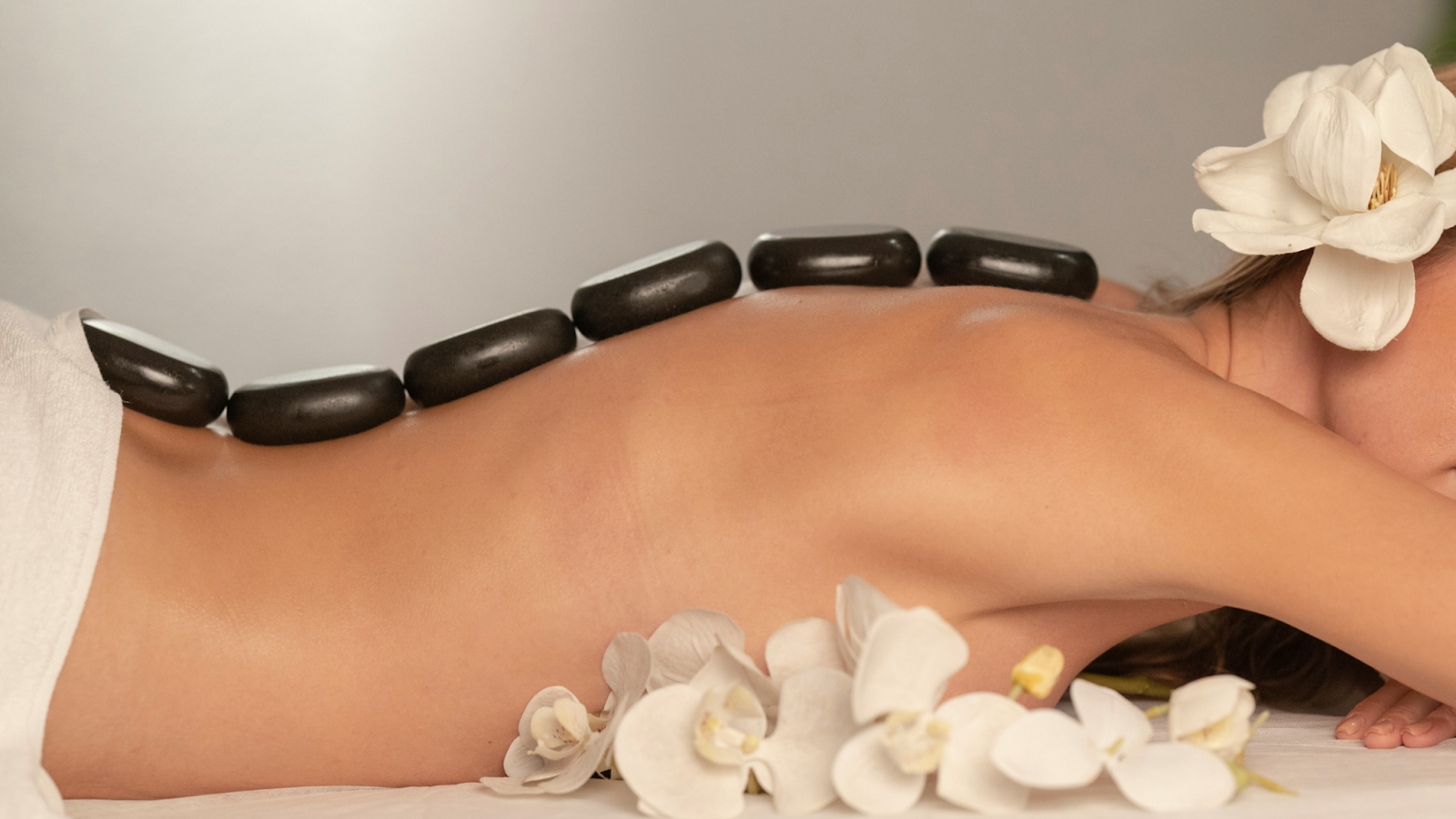
Therapists use smooth, flat basalt stones known for their ability to retain heat. These stones are warmed in water between 110°F and 130°F. Stones are placed on specific points along the spine to improve the flow of energy and warm the muscles. The therapist also holds the stones and uses them as an extension of their hands to perform long, gliding strokes (effleurage) or circular movements.
The following are the benefits of a hot stone massage:
- Deep heat penetration
- Muscle softening
- Spasm reduction
- Stress and sleep support
- Thai Massage
Also known as Lazy Man’s Yoga, Thai massage is an ancient healing system that combines acupressure, Indian Ayurvedic principles, and assisted yoga postures. It is highly active and focuses on moving the body through a series of stretches to unlock tension.
The therapist uses their hands, knees, legs, and feet to move the participant into yoga-like positions. Firm pressure is applied along “Sen” lines (energy channels) to release blockages that may be manifesting as physical pain.
Thai massage offers the following benefits:
- Decompression of the spine
- Enhanced flexibility
- Joint mobilization
- Functional recovery
Conclusion
Massage is a powerful, non-invasive therapy for back pain. Choosing the right massage therapy is the first step to back pain relief and a personalized journey to wellness. It is also important to choose the right clinic for the best massage for back pain.
Get health and healing through touch at Ultimate Health Clinic, an award-winning massage therapy clinic in East Gwillimbury.
Frequently Asked Questions
Which type of massage is best for chronic vs. acute back pain?
Deep tissue or trigger point therapy can be effective for chronic back pain. Swedish massage and myofascial release can provide relief from acute back pain.
How often should I get a massage to see results for my back pain?
It depends on the severity of back pain. Therapists recommend once a week for 4 to 6 weeks to achieve the structural change required for chronic issues. Once the pain is managed, a massage session once a month is usually enough to prevent the tension from returning.
Is it normal to feel sore after a massage treatment?
Soreness after a massage is normal for 24 to 48 hours, particularly after Deep Tissue or Trigger Point sessions. Staying hydrated after a session can help minimize discomfort.
Can massage therapy help with sciatica or herniated discs?
Massage therapy can be used as a complementary treatment for these conditions, but it does not fix a herniated disc. It can relieve the secondary muscle spasms caused by the injury. In the case of sciatica, myofascial release can be helpful.
When should I avoid massage therapy for my back pain?
Individuals with recent trauma, fever or infection, numbness or weakness, or a history of Deep Vein Thrombosis (DVT) should consult a physician before a session.