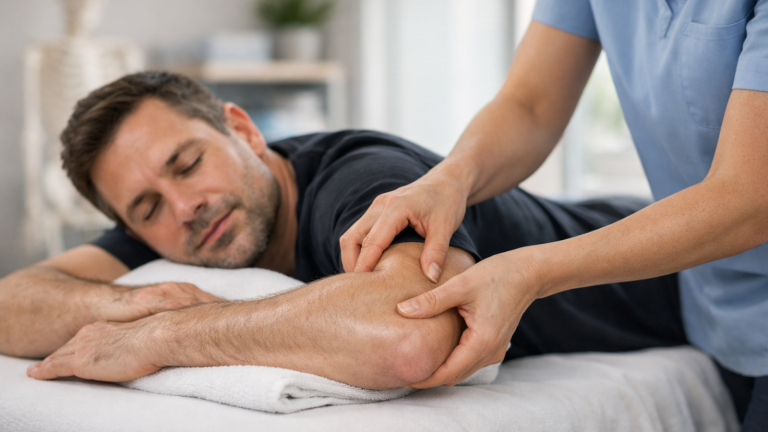
Top 5 Massage Therapies for Sciatica Pain Relief
Table of Contents:
- What is Sciatica Pain?
- Causes of Sciatica Pain
- 5 Massage Techniques for Sciatica Pain
- Frequently Asked Questions
Summary
- Common causes include disc herniation, spinal stenosis, muscle tightness (especially piriformis), injury, and age-related spinal changes.
- Massage therapy does not correct structural problems but helps reduce muscle tension and inflammation that worsen symptoms.
- Deep tissue massage and trigger point therapy target chronic muscle tightness and referred pain patterns.
- Myofascial release improves fascial mobility, reduces nerve compression, and restores pelvic and lumbar biomechanics.
- Swedish and hot stone massage promote relaxation, enhance circulation, and decrease muscle guarding to support pain relief.
Massage therapy has long been proven to be a beneficial intervention for managing musculoskeletal pain and improving mobility. Can massage help sciatica pain? Let’s find out. First, it’s important to understand sciatica in detail.
What is Sciatica Pain?

The sciatic nerve is the longest single nerve in your body that originates from the lower spine and extends to the back of each leg to the feet. It provides both sensory and motor functions, enabling movement and sensation in the posterior thigh, lower leg, and sole of the foot.
Sciatica pain is characterized by radiating nerve pain that travels along the path of the sciatic nerve, often accompanied by numbness, tingling, or muscle weakness. Prolonged sitting, standing, sneezing, coughing, or twisting can worsen the pain.
Causes of Sciatica Pain
The common causes of sciatica pain include:
- Spinal disc pressing directly on the sciatic nerve
- Narrowing of the spinal canal, known as spinal stenosis
- A tight or inflamed piriformis muscle irritating the sciatic nerve
- Age-related disc wear
- A vertebra that has slipped forward, compressing nerve roots
- Tight lower back or hip muscles putting pressure on the nerve
- Falls, car accidents, or pelvic fractures
- Increased spinal pressure and postural shifts during pregnancy
- Tumors or infections affecting nerve roots
5 Massage Techniques for Sciatica Pain
Many cases of sciatica pain involve muscle tightness and inflammation that contribute to nerve irritation.
| Massage does not cure structural issues such as herniated discs. It reduces muscular tension worsening symptoms. |
- Deep Tissue Massage
Muscles can develop adhesions due to overuse, injury, poor posture, or repetitive strain, restricting blood flow, limiting mobility, and causing inflammation or pain. Deep tissue massage involves working through superficial muscle layers to reach deeper structures where chronic tension often resides, stimulating the natural healing response.
| Technique | Goal |
| Slow, Deep Strokes | Reach deeper muscle layers and gradually release tension |
| Sustained Firm Pressure | Break down adhesions and scar tissue |
| Trigger Point Therapy | Deactivate specific pain referral points |
| Cross-Fiber Friction | Realign muscle fibers and improve flexibility |
You may experience mild soreness for 24–48 hours after a deep tissue massage for sciatica pain relief.
Avoid deep tissue massage if you have:
- Blood clotting disorders, thrombosis, or severe vascular issues
- Bone or joint issues
- Fresh injuries, broken skin, or recent surgeries
- Pregnancy
- Skin infections/rashes
- Myofascial Release Therapy
Fascia is the connective tissue web that surrounds muscles, nerves, and blood vessels. Fascia loses its elasticity when it becomes dehydrated, inflamed, or restricted, which creates abnormal tension patterns that can:
- Increase compression around the sciatic nerve
- Restrict nerve glide (neural mobility)
- Alter pelvic alignment
- Increase the mechanical load on the lumbar discs
Myofascial release therapy does not just work on muscle fibers; it also specifically targets the fascial system with slow, sustained pressure, held for 90–120 seconds or more, to allow the fascia to lengthen. The massage therapy:
- Reduces nerve entrapment
- Decreases intramuscular pressure
- Restores pelvic and lumbar biomechanics
- Downregulates the nervous system
- Improves hydration of fascial tissue
| Technique | Goal |
| Slow Sustained Pressure | Lengthen fascia |
| Gentle Skin Traction (no oil) | Engage superficial fascial layers |
| Cross-Hand Fascial Stretch | Release large fascial planes in lower back and hips |
| Pelvic Unwinding Techniques | Reduce asymmetrical fascial tension patterns |
| Indirect Release (following tissue resistance) | Calm nervous system |
Avoid myofascial release therapy if you have:
- Acute disc herniation with severe neurological deficits
- Active infection
- Uncontrolled inflammatory conditions
- Recent fractures
- Open wounds
- Trigger Point Therapy
Trigger points can compress small nerve branches, reducing local circulation and creating referred pain patterns that travel down the buttock and posterior thigh, and even into the calf. Trigger point therapy targets and deactivates these specific nodules to reduce referred pain.
The therapy:
- Improves blood flow
- Interrupts the pain-spasm cycle
- Reduces referred pain
- Improves muscle activation
| Technique | Goal |
| Ischemic Compression | Deactivate the trigger point and restore circulation |
| Stripping Along Taut Bands | Locate and release contracted muscle fibers |
| Pin-and-Stretch Technique | Shorten and lengthen muscle under pressure to improve mobility |
| Dry or No-Lotion Contact | Prevent slipping and allow precise targeting |
| Gradual Pressure Build-Up | Engage the tissue without triggering protective guarding (involuntary increase in muscle tension) |
You may experience localized, temporary soreness that lasts up to 24 hours.
Avoid trigger point therapy if you have:
- Acute nerve inflammation
- Blood clotting disorders
- Active infection
- Severe osteoporosis (high risk of fracture due to reduced bone density)
- Recent surgery
- Swedish Massage
Many patients experience sciatica pain because their nervous systems become hypersensitive. Muscles surrounding the lumbar spine and hips tighten reflexively to protect the irritated nerve root. Swedish massage is particularly beneficial in such cases, as it helps:
- Reduce muscle guarding
- Lower stress hormones
- Enhance lymphatic flow
- Prepare tissue for deeper work
| Technique | Goal |
| Effleurage (Long, Gliding Strokes) | Increase circulation and warm superficial tissue |
| Petrissage (Kneading and Lifting) | Reduce muscle tension and improve tissue mobility |
| Friction (Light to Moderate) | Improve localized blood flow without deep compression |
| Tapotement (Rhythmic Tapping, used cautiously) | Stimulate tissue when appropriate |
| Passive Joint Movements | Improve hip and lumbar mobility gently |
Avoid Swedish massage if you have:
- Acute inflammatory conditions with severe swelling
- Skin infections or open wounds
- Fever or systemic infection
- Uncontrolled cardiovascular conditions
- Deep vein thrombosis
- Hot Stone Massage Therapy
Hot stone massage therapy uses controlled heat to influence muscle tone, blood flow, and connective tissue extensibility to help manage sciatica pain. Stones heated between 110–130°F (43–54°C) are strategically placed along the paraspinal muscles, gluteals, or hamstrings. The massage therapy helps:
- Reduce muscle guarding
- Increase blood flow
- Reduce fascial resistance
- Improve hip mobility
- Ease the stretching of tight hamstrings
- Reduce perceived stiffness
| Technique | Goal |
| Heated stone placement along paraspinals | Relax lumbar extensor muscles |
| Stone application over gluteal muscles | Reduce deep hip tension |
| Heat followed by manual effleurage | Enhance circulation and tissue mobility |
| Alternating heat and gentle stretching | Improve hip range of motion safely |
| Controlled temperature monitoring | Prevent tissue irritation or burns |
Avoid this massage therapy if you have:
- Acute inflammatory conditions
- Peripheral neuropathy or reduced sensation
- Diabetes with impaired sensation
- Open wounds or skin infections
- Severe vascular disease
- Fever
Ultimate Health Clinic is located in Holland Landing and has expert therapists providing a wide range of massage therapies to support pain management, recovery, and long-term musculoskeletal health.
Book appointment now!
Frequently Asked Questions
How many sessions are needed?
| Severity | Number of Sessions |
| Mild | 4–6 |
| Moderate | 6–10 |
| Chronic or recurrent | Every 2–4 weeks |
Is a daily massage safe?
Daily massage is generally not necessary for sciatica. It may sometimes overstimulate irritated tissues.
Should I see a doctor before getting a massage for sciatica?
Consult a doctor if you experience:
- Progressive leg weakness
- Loss of bladder or bowel control
- Severe or worsening neurological symptoms
- Pain following major trauma
- Suspected infection or tumor