How Osteopathic Manipulative Treatment Improves Health
Summary
- The Integrated Body: OMT treats the body as a single unit, recognizing that a restriction in one area often causes pain in another.
- The TART Framework: Practitioners use objective markers—Tissue texture, Asymmetry, Restriction, and Tenderness—to find the root cause of pain.
- Mechanical Flushing: OMT manually drives the lymphatic pump and circulatory efficiency to remove toxins and deliver oxygen to damaged tissues.
- Neurological Reset: Techniques help shift the autonomic nervous system from a stress-dominant state toward a “rest and repair” mode.
- Restoring Self-healing: The ultimate goal is to remove physical roadblocks, allowing your body to return to its natural state of self-regulation.
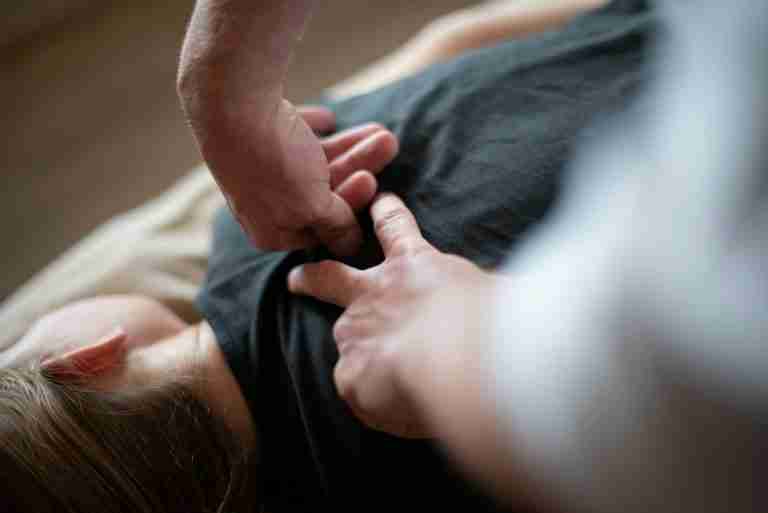
Osteopathic manipulative treatment is a hands-on approach that uses manual techniques to diagnose and treat impairments in your musculoskeletal system. A manual osteopath applies pressure to muscles, joints, and fascia to help your circulatory, lymphatic, and nervous systems function without any physical obstruction.
| According to a 2025 study published in Frontiers, Osteopathic Manipulative Treatment (OMT) reduced hospital recovery time from an average of seven days down to 4.6 days. |
The Four Pillars of Osteopathic Medicine
Unlike localized treatments that only address the site of pain, the following four principles of osteopathic manipulative treatment ensure a systemic approach to recovery.
Unity of the Body
Your body is a single, integrated unit in which a physical blockage in one area can disrupt the function of an entirely different part. For example:
- A tight rib can make your digestive system less efficient.
- A restriction in the pelvic floor can cause chronic neck pain.
For example, someone who spends long hours at a desk may develop restricted neck and upper back movement, which can contribute to tension headaches.
Self-Regulation
Poor circulation, inflammation, and nerve impingement can act as roadblocks to critical processes such as tissue repair, immune response, and natural pain regulation. However, your body has a natural ability to heal itself when it gets the right environment. Manual osteopathic therapy removes these roadblocks to help your body’s immune and circulatory systems function more efficiently.
Structure/Function Interrelationship
When the structure of your body (bones, muscles, and fascia) is out of alignment, functions such as blood flow, nerve signaling, and lymphatic drainage are compromised.
For example, a restricted vertebra can physically compress the nerves exiting the spine. This often leads to muscle weakness or organ dysfunction. OMT improves structural alignment to support normal function.
Rational Treatment
The fourth pillar is rational treatment, a plan built on the first three pillars. This treatment uses myofascial release, joint mobilization, cranial-sacral therapy and other manual techniques. It is based on clinical understanding of human anatomy and how specific structural and functional changes affect your overall health.
How Does Osteopathic Medicine Work?
The Somatic Dysfunction
A manual osteopath identifies somatic dysfunction to guide treatment. Somatic dysfunction is an impaired or altered function of the body’s framework (skeletal, myofascial, and arthrodial structures) along with related vascular, lymphatic, and neural elements.
The osteopath uses TART, a clinical diagnostic framework, to identify somatic dysfunction.
Tissue Texture
Changes in tissue texture can reveal restricted blood flow or inflammation. Hard or ropy muscles indicate chronic contraction, which physically squeezes the capillaries and prevents oxygen-rich blood from reaching cells.
Asymmetry
Asymmetry provides visual evidence of uneven mechanical stress on your body. It identifies exactly where your body has shifted away from its midline to compensate for a restriction.
The osteopath evaluates:
- Structural alignment
- The weight-bearing axis
- The compensatory pattern
Restriction of Motion
Every joint has a starting point and an end point. Restriction refers to a limitation in a joint or tissue’s normal range of motion. When there is a dysfunction, joint movement stops prematurely. The osteopath evaluates the following two specific types of motion to find this blockage:
- Active Motion: How far the patient can move the joint on their own.
- Passive Motion: How far the practitioner can move the joint while the patient is relaxed.
Tenderness
Tenderness maps nociceptor sensitivity. Nociceptors are specialized nerve endings that transmit signals of danger to the brain. These nerve endings become hypersensitive when a tissue lacks proper blood flow or is restricted. Nociceptors start sending more danger signals to the brain.
In manual osteopathic therapy, the practitioner looks for locations where nerve endings are firing these signals. This helps in understanding the underlying state of the tissue.
Key Techniques
Myofascial Release
Target: The fascia (a 3D web of connective tissue surrounding your muscles)
Action: Sustained, low-load pressure into the restricted area
Result: Fixed tissue texture issues such as boggy swelling or ropy knots
Muscle Energy
Target: Muscle Spindles (sensors that control the resting length of muscle)
Action: Contracting a specific muscle against the practitioner’s resistance for a few seconds, then relaxing
Result: Full range of motion restored
High-Velocity Low-Amplitude (HVLA)
Target: Misaligned or “locked” joints
Action: A rapid, short-distance thrust applied to a specific joint
Result: Joint position reset
Cranial-Sacral Therapy
Target: Bones of the skull, the tailbone (sacrum), and the rhythm of the cerebrospinal fluid
Action: Extremely light touch to monitor and guide the movement of the targeted structures into their natural rhythm
Result: Reduced tenderness and nerve hypersensitivity
Physiological Optimization
The Lymphatic Pump
The lymphatic system, the waste-disposal network of the human body, relies on body movement and pressure changes to move the fluid that carries metabolic waste (toxins, dead cells, and inflammatory chemicals). OMT uses rhythmic, gentle pressure (often called lymphatic pumping) to physically push that fluid through the vessels, clearing metabolic waste. This reduces pressure on nociceptors (nerve endings sending danger signals) and lowers pain.
The Autonomic Nervous System (ANS)
The ANS is the master control centre that governs everything from your heart rate to your digestion. The ANS operates in the following two modes:
- Sympathetic (Fight or Flight)
- Parasympathetic (Rest and Repair)
When you have a structural dysfunction or chronic pain, the ANS operates in the sympathetic state. As a result, your body prioritizes survival over maintenance, driving blood away from your organs to that specific location. Your muscles stay tense, and healing slows to a crawl.
Manual osteopathy uses gentle manipulation, particularly around the base of the skull and tailbone, to help signal to the nervous system that the body is safe. The ANS then shifts into parasympathetic mode, which is the rest-and-repair state.
Circulatory Efficiency
Chronically tight muscles or misaligned joints can begin to compress nearby blood vessels. Due to restricted blood flow, cells don’t receive sufficient oxygen and produce more waste products, irritating nociceptors (nerve endings that send danger signals). This creates a cycle of pain.
OMT uses techniques such as myofascial release and HVLA to decompress the areas surrounding arteries and veins, restoring the flow of oxygenated blood to the cells.
Clinical Applications of Osteopathic Manual Treatment
OMT can help address the following conditions:
- Chronic back and neck pain
- Sports injuries
- Joint dysfunction
- Migraines and tension headaches
- Sciatica
- Temporomandibular joint (the hinge that connects your jaw to the temporal bones of your skull) disorders
- Digestive issues
- Respiratory support
- Circulatory issues
It also helps with:
- Scar tissue management
- Post-pregnancy recovery
- Occupational wellness
Conclusion
Osteopathic manipulative treatment is more than a series of manual techniques. It recognizes the natural, built-in capacity for recovery. The body provides clues (Tissue texture, Asymmetry, Restriction, and Tenderness) to reveal where internal flow is blocked and where the nervous system is stuck in a state of alarm. With these clues, a manual osteopath can look beyond the symptoms to identify the underlying source of dysfunction and address it.
Ultimate Health Clinic has an award-winning & licensed team for osteopathic manual treatment in East Gwillimbury.
Book an appointment now!
Frequently Asked Questions
Does OMT actually work, or is it just like a massage?
OMT differs from massage in that it focuses on identifying and treating somatic dysfunction.
Can OMT make pain worse before it gets better?
You may feel some soreness for 24–48 hours after a session.
Do you have to keep going forever once you start OMT?
No. OMT aims to restore your body’s self-regulation. Once the blockage is removed and your systems are optimized, your body should be able to maintain its own health.
Is OMT the same thing as chiropractic treatment?
Chiropractors primarily focus on spinal alignment, whereas manual osteopaths treat the spine, fascia, muscles, and internal rhythms (like lymphatic flow) to ensure the entire system is integrated.
Can OMT help with posture?
Your posture is a direct result of your body’s structure and function. OMT physically allows your body to return to its natural midline. So, it can definitely help you with posture.