Tennis Elbow Treatment with Osteopathy
Summary
- Whole-Body Approach: Fixes imbalances in the neck, shoulder, and wrist that overload the elbow.
- Tendon Rebuilding: Uses controlled loading to replace weak, frayed tissue with strong Type I collagen.
- Accurate Diagnosis: Identifies “imposter” pain, such as nerve entrapment in the radial tunnel.
- Manual Techniques: Restores joint glide and reduces muscle tension through targeted mobilization.
- Three-Phase Rehab: Moves from pain-relieving holds to heavy resistance for long-term strength.
- Non-Surgical Recovery: Helps 90% of patients heal using structural correction and load management.
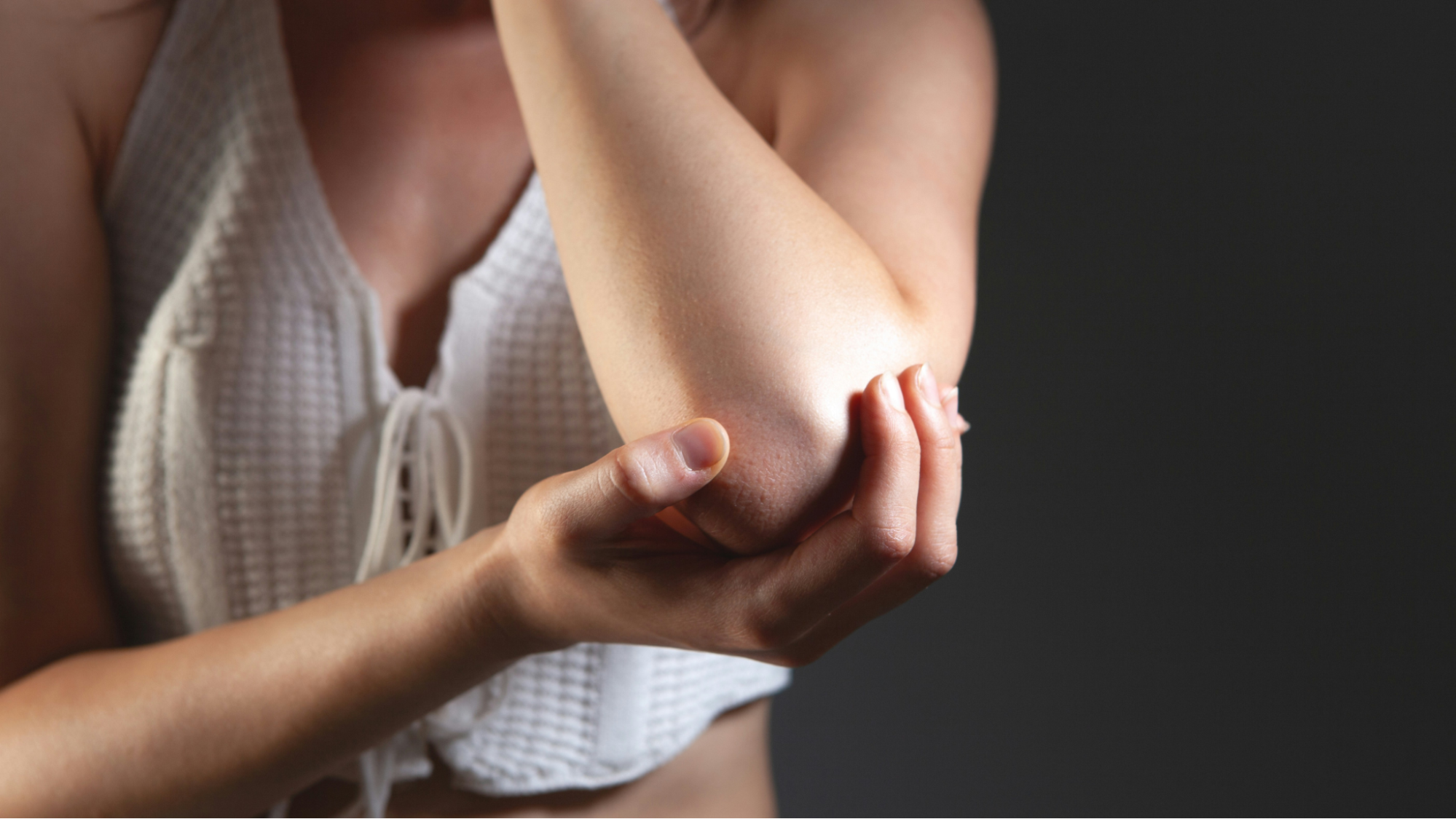
Our elbow joint consists of a bony protrusion, called the lateral epicondyle, at the end of the upper arm bone. It attaches the muscles of your forearm to the bone of your upper arm via tendons. However, this attachment point is a small, high-stress area where all the force from your grip and wrist movements is concentrated.
Overuse of these muscles results in micro-tears and structural wear in the tendon (Extensor Carpi Radialis Brevis) that connects the muscles to the lateral epicondyle. This painful condition is commonly known as tennis elbow.
The main cause of tennis elbow injury is repetitive motion which happens not only while playing tennis but also while painting, plumbing, cleaning, using tools, or typing.
- Pain or tenderness on the bony bump (lateral epicondyle) on the outer side of your elbow.
- Burning sensation radiating from the elbow down into the forearm and toward the wrist.
- Weakened grip strength, making it difficult to hold objects.
- Increased pain when twisting the forearm.
- Sharp pain during wrist extension, like when lifting an object.
- Morning stiffness in the elbow joint that may improve slightly with light movement but worsens with activity.
Most cases improve with conservative treatment, including load management, using a counterforce brace, and osteopathy to correct underlying mechanical imbalances. 90% of people recover without surgery.
The Structural Reality of the Tendon
A healthy tendon is made of Type I collagen, which is thick, straight, and built to handle heavy loads. When the Extensor Carpi Radialis Brevis begins tearing due to overuse, your body tries to fix it by replacing the Type I collagen with Type III, which is thin, messy, and weak. It cannot handle the stress of your wrist movements and keeps tearing over and over. In the end, you have a tendon that is more like a frayed rope.
How Does it Heal?
Tendons only get stronger when they are put under physical tension. Applying a specific load to the tendon signals the body to start building strong Type I collagen again. You need to use controlled movement to force the tissue to rebuild itself.
Osteopathic Differential Diagnosis
Osteopath treatment for elbow relief does not just look where it hurts. It looks at how the entire arm and neck work together. Sometimes, tennis elbow occurs due to a mechanical failure elsewhere.
The Neck Connection
The nerves for your arm exit from your neck. If these nerve roots are irritated or compressed, this causes pain signals straight to the elbow. So, when the root cause is in the neck, local tennis elbow massage techniques can provide temporary relief. Osteopathy massage therapy addresses the root cause at the neck to provide permanent relief.
Radial Tunnel Syndrome
Radial tunnel syndrome occurs when the radial nerve becomes trapped or squeezed as it tunnels through the forearm muscles.
| The radial nerve is the primary communication line between your brain and your arm, carrying the electrical signals that tell your muscles to move and your skin what to feel. |
Radial tunnel syndrome is the most common tennis elbow imposter.
An osteopathic manual practitioner clearly identifies if the cause of the pain is nerve entrapment or tendon wear. This helps ensure that only the right structure is treated.
Shoulder Stability
If the muscles that stabilize your shoulder blade are weak, then your shoulder becomes unstable and your elbow has to overwork. Osteopathy massage therapy is used to release the tight chest and shoulder muscles, resetting the foundation so the pressure is taken off the elbow.
Forearm Rotation
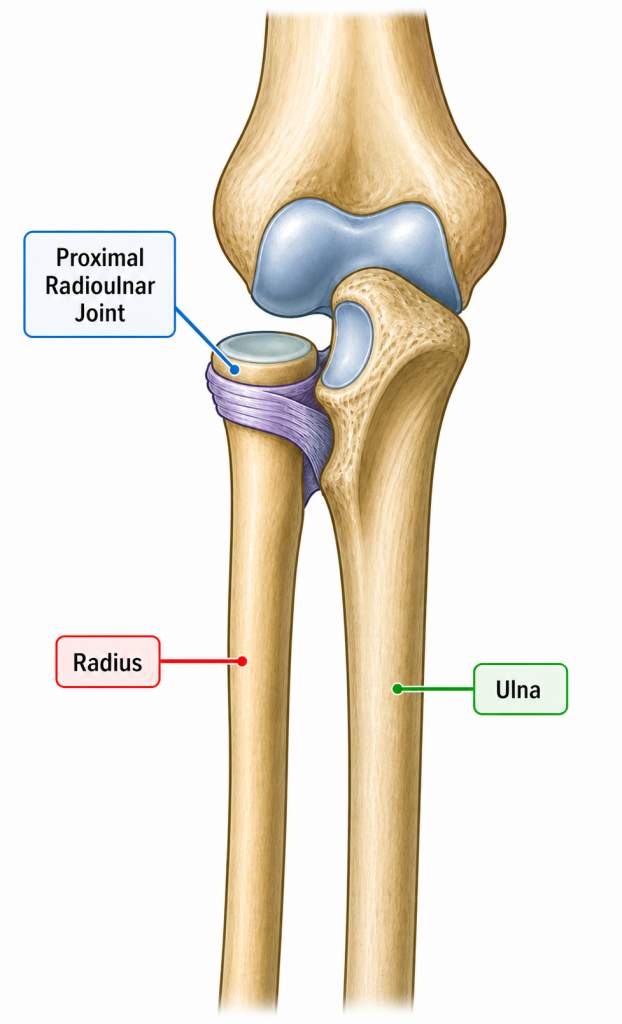
Your forearm has two bones (the radius and the ulna) that rotate around each other smoothly at the radioulnar joint. This rotation allows you to turn your hand. When the joint is restricted, in order to compensate, your body puts extra twisting stress directly onto the ECRB tendon. Osteopathic massage helps restore this rotation and remove the constant twisting stress, providing long-term elbow relief.
Osteopathic Manual Therapy (OMT) Interventions
After identifying the source of the mechanical failure, an osteopathic manual practitioner uses hands-on techniques to restore tension and structural balance. The OMT interventions target both soft tissue and the underlying joint mechanics.
Myofascial Release & Osteopathic Massage
An osteopathic manual practitioner uses osteopathic massage to target the tight fascia and muscles of the forearm, reducing the constant pull on the lateral epicondyle. This not only provides immediate elbow relief but also creates a better environment for the tendon to heal.
Joint Mobilization
Gentle mobilization techniques (such as High-Velocity, Low-Amplitude, Muscle Energy Technique and Muscle-to-Joint Gliding) restore the natural glide of the joints to ensure that when you move your arm, the force is distributed evenly through the bones rather than being dumped entirely onto the tendon.
Nerve Gliding Techniques
If the practitioner identifies radial tunnel syndrome, they use rhythmic movements designed to help the radial nerve slide smoothly through the muscle tunnel without getting compressed.
Lymphatic Drainage & Circulation
Tendons have poor blood supply and that is why they heal so slowly. Osteopath treatment helps improve local circulation and lymphatic drainage. The treatment moves fluids away from the inflamed area and improves the flow of fresh, oxygenated blood to the ECRB. As a result, weak Type III collagen is transitioned to strong Type I collagen.
Tennis Elbow Rehabilitation
Phase 1: Isometric Loading (Pain Relief)
In this phase, you are asked to hold weight in a steady position for 30–45 seconds without moving your wrist. The constant tension causes the nervous system to quiet the pain signals.
Phase 2: Eccentric Strengthening (The Rebuild)
The Extensor Carpi Radialis Brevis muscle is lengthening while it is under tension. This slow, controlled stretching under load forces the Type III collagen fibers to align themselves straight, making the tendon much tougher.
Phase 3: Heavy Slow Resistance (HSR)
Heavy Slow Resistance involves performing wrist extensions with a heavier weight, moving very slowly. Increasing the load-bearing capacity of the ECRB helps ensure that your elbow can handle daily activities such as lifting objects.
Ultimate Health Clinic is a trusted name for osteopath treatment in East Gwillimbury. Book your osteopathy appointment today!
FAQ’s
1. What is the average clinical timeline for tendon remodeling?
While you may get relief in 3–6 weeks, it can take 3 to 6 months to replace weak fibers with strong Type I collagen.
2. Why does it hurt more when I’m gripping small tools or pens?
You need to squeeze harder to hold small objects tightly, which forces your forearm muscles to pull harder on the injured tendon. A thicker, padded grip keeps your hand relaxed and reduces painful tugging on your elbow.
3. Should I wear a brace, and will it make my muscles weak?
Wearing a brace does not weaken your muscles. A brace absorbs the shock of movement before it reaches your injured bone. It is actually a helpful tool to protect the area while you are working or active.
4. Could my neck be the reason my elbow isn’t healing?
Nerves in your neck control movement and sensation in your arm. When these nerves are irritated or compressed at the shoulder or neck, it can disrupt normal muscle function and contribute to ongoing elbow pain.