RMT vs. Physiotherapist: Which Do You Need for Your Injury?
One of the most common questions people ask after developing pain or an injury is, “Should I see a Registered Massage Therapist (RMT) or a physiotherapist?”
Both are regulated healthcare professionals who help people recover from pain and injury. However, they have different scopes of practice, treatment approaches, and areas of expertise. And for some conditions, one will serve you significantly better than the other. This guide explains what each professional does, which conditions each is best suited for, and when combining both yields the best results.
| Key Takeaways: 1. Choose an RMT if your primary concern is muscle tension, soft tissue pain, stress, or post-injury muscle recovery. 2. Choose a physiotherapist for joint injuries, post-surgical rehabilitation, nerve conditions, movement dysfunction, or sports injuries. 3. Many patients benefit from both RMT and physiotherapy, as massage therapy relieves muscle tension while physiotherapy restores strength, mobility, and function. 4. No doctor’s referral is required to book either service in Ontario, although some extended health insurance plans may require one for reimbursement. 5. If you are unsure where to start, RMT vs. physiotherapist, an assessment can help determine the most appropriate treatment plan for your condition. |
What Does a Registered Massage Therapist (RMT) Do?
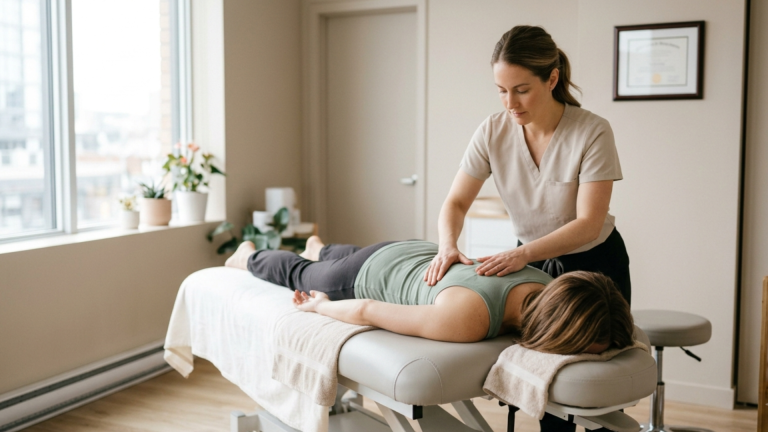
A registered massage therapist is a regulated healthcare professional in Ontario, registered with the College of Massage Therapists of Ontario (CMTO). They complete a minimum of two to three years of formal training in anatomy, physiology, pathology, and hands-on therapeutic techniques.
RMT’s work directly with your muscles, connective tissue, and fascia by hand. Their primary goal is to reduce pain, improve mobility, relieve muscle tension, and support the body’s natural healing process, helping people recover from soft tissue injuries, manage chronic pain, relieve stress-related muscle tension, and improve overall mobility.
What RMTs are particularly strong at:
- Releasing chronic muscle tension
- Treating muscle-related pain
- Reducing stress and anxiety
- Prenatal care
- Post-injury soft tissue recovery
- General wellness maintenance
If you are dealing with any of these issues, consider booking a registered massage therapy session at Ultimate Health Clinic. We provide Swedish massage, deep tissue massage, trigger point therapy, myofascial release, and prenatal & postnatal massage therapy to support your recovery and overall well-being.
What Does a Physiotherapist (PT) Do?
A physiotherapist (also called a physical therapist) is also a regulated healthcare professional in Ontario, registered with the College of Physiotherapists of Ontario (CPO). Unlike massage therapy, physiotherapy requires a master’s degree and the students are trained to assess and treat a broader range of conditions, including musculoskeletal, neurological, and cardiorespiratory issues.
Physiotherapists use manual therapy, therapeutic exercise, electrotherapy (such as ultrasound or TENS), acupuncture (if trained), and movement rehabilitation, and they are particularly great at identifying the root cause of movement dysfunction and building a corrective treatment plan.
What physiotherapists are particularly strong at:
- Post-surgical rehabilitation
- Biomechanical analysis
- Sports injury management
- Neurological conditions
- Balance and gait disorders
- Complex injuries involving joints and bones
| Looking for physiotherapy care in East Gwillimbury? At Ultimate Health Clinic, our physiotherapists provide personalized treatment plans to help you recover from injuries, relieve pain, restore mobility, and get back to your daily activities with confidence. Our physiotherapy service has also been recognized with multiple awards for delivering exceptional patient care. |
READ MORE: To know more in depth about when you should see a physiotherapist, read our guide on 8 Reasons You Should See a Physiotherapist.
Key Differences at a Glance: RMT vs. Physiotherapist
| Registered Massage Therapist (RMT) | Physiotherapist (PT) | |
| Regulatory body | College of Massage Therapists of Ontario (CMTO) | College of Physiotherapists of Ontario |
| Primary focus | Soft tissue like muscles, fascia, connective tissue | Movement, function, and rehabilitation across the whole musculoskeletal and neurological system |
| CommonTechniques | Hands-on manual techniques, cupping, myofascial Release | Manual therapy, therapeutic exercise, electrotherapy, gait/movement analysis |
| Best suited for | Muscle tension, chronic tightness, stress-related pain, general soft-tissue recovery | Joint, bone, or nerve involvement; post-surgical recovery; biomechanical dysfunction |
Quick Difference:
- Massage therapy primarily targets the soft tissues, including your muscles, fascia, and connective tissue.
- Physiotherapy is primarily about movement, function, and rehabilitation across the whole musculoskeletal and neurological system.
| A practical rule of thumb: 1. If your main symptom is muscle tightness, chronic tension, stress, or pain “living in the muscles,” start with an RMT. 2. If your pain involves a specific joint, bone, or nerve, or you’re recovering from surgery, a physiotherapy assessment is the better starting point. |
When Should You See Both an RMT and a Physiotherapist?
Many patients benefit from a coordinated treatment plan that combines the expertise of both. Because each profession focuses on different aspects of recovery, working together often leads to better pain relief, improved mobility, and faster rehabilitation than relying on a single treatment approach.
Why Combine RMT and Physiotherapy?
Using both treatments together often gives you faster, better results than using just one. Massage relaxes your tight muscles, while physiotherapy builds strength so the pain does not return.
For example:
- If you have Lower Back Pain, then
- Physiotherapist: Finds weak core muscles and gives you simple exercises to fix your posture.
- RMT: Hands-on massage relaxes tight muscles in your hips and lower back to bring fast relief.
- Result: You feel better quickly and fix the main problem so the pain stays away.
- And if you need Shoulder Surgery Recovery
- Physiotherapist: Teaches you safe exercises to move your arm and regain joint strength.
- RMT: Will help soften the hard scar tissue and relax the tired muscles around your shoulder.
- Result: The shoulders will heal faster, hurt much less and move easily.
Do You Need a Referral for Either?
You do not need a physician’s referral to see either a registered massage therapist or a physiotherapist in Ontario. They can operate with direct access, allowing you to book an appointment without a doctor’s note. However, we recommend checking your specific plan before your first appointment, because some insurance plans require a referral for coverage.
There are two situations that are also worth knowing about:
- Extended health insurance
Some private plans still require a physician’s referral to reimburse a claim, even though a referral isn’t required to book the appointment. Check your specific plan before your first visit.
- OHIP-funded physiotherapy
The Ontario government funds physiotherapy through the Community Physiotherapy Clinic Program for specific groups, such as patients aged 65+ or youth under 19. No referral is needed to receive care at these designated clinics, per the College of Physiotherapists of Ontario, though eligibility criteria apply. Also note that Massage therapy is not covered under OHIP.
Why Choose Ultimate Health Clinic for Your Recovery?
The right treatment depends on what’s causing your pain, not just where it hurts. A Massage therapy will ease your muscle tension, while a physiotherapy will help you move better and build strength after an injury or surgery. And many times in a treatment, combining both will provide complete recovery.
If you are unsure which treatment is right for you, our team can assess your condition and help you choose the most appropriate care plan. So, book online at ultimatehealthclinic.janeapp.com or call us at 905-251-0162.
FAQs
1. Is it better to see an RMT or a physiotherapist first?
It depends on the source of your pain. If you are experiencing muscle tightness, stress-related discomfort, or soft tissue pain, an RMT is often a good starting point. If your symptoms involve a joint, nerve, post-surgical recovery, or movement limitations, a physiotherapist can assess the underlying cause and create a rehabilitation plan.
2. Can I receive massage therapy and physiotherapy at the same time?
Yes. Many patients achieve better results by combining both treatments. Massage therapy helps reduce muscle tension and improve tissue mobility, while physiotherapy focuses on restoring strength, flexibility, movement patterns, and long-term function. Together, they often speed up recovery and reduce the likelihood of recurring pain.
3. Which conditions are best treated by an RMT?
Registered massage therapists are particularly effective for muscle tension, chronic muscle pain, stress-related tightness, headaches caused by muscle tension, soft tissue injuries, prenatal discomfort, and general wellness maintenance. Their treatments focus on improving circulation, reducing pain, and restoring normal muscle function.
4. What conditions are physiotherapists best suited to treat?
Physiotherapists specialize in treating movement-related conditions such as sports injuries, joint pain, post-surgical rehabilitation, arthritis, neurological disorders, balance problems, tendon injuries, and biomechanical dysfunction. Their treatment plans often combine manual therapy with targeted exercises and movement retraining.
5. Is massage therapy covered by OHIP?
No. Registered Massage Therapy is not covered by OHIP. However, many employer-sponsored extended health insurance plans include massage therapy benefits. Coverage amounts and referral requirements vary by insurer, so reviewing your policy before treatment is recommended.
6. How do I know if I need both an RMT and a physiotherapist?
If your condition involves both muscle tightness and movement dysfunction, combining both therapies may provide the best outcome. For example, an RMT can relieve muscle tension while a physiotherapist addresses joint mechanics, strength, balance, and movement patterns to prevent the issue from returning.